Table of Contents
Transforming raw lumber into precise, project-ready components requires a centerpiece tool that balances professional capability with home shop practicality. For decades, woodworkers faced a frustrating choice: settle for underpowered contractor saws or wrestle with massive, power-hungry cabinet saws designed for industrial spaces. The hybrid table saw emerged as the revolutionary answer—a category that captures the soul of cabinet saw performance while respecting the constraints of garage and basement workshops. As we navigate this year’s market, understanding what separates exceptional hybrid saws from mediocre imposters becomes critical for making an investment that will serve your craft for decades.
This comprehensive guide dismantles the hybrid table saw category piece by piece, revealing the engineering details, specification nuances, and practical considerations that matter most to serious home woodworkers. Whether you’re upgrading from a portable jobsite saw or stepping up from an aging contractor model, these insights will equip you to evaluate any hybrid saw with the discernment of a seasoned professional.
Top 10 Hybrid Table Saws
Detailed Product Reviews
1. Shop Fox W1837 10" 2 hp Open-Stand Hybrid Table Saw

Overview: The Shop Fox W1837 bridges the gap between contractor and cabinet saws, offering serious hobbyists a 2HP hybrid solution prewired for 120V but convertible to 240V. The 40-1/4" precision-ground cast iron table with steel wings provides exceptional stability, while the enclosed cabinet bottom with 4" dust port manages debris effectively. With a 30" rip capacity, it handles substantial sheet goods for most woodworking projects without dominating shop space.
What Makes It Stand Out: Its hybrid design delivers cabinet saw benefits—enclosed base and superior dust collection—at an accessible price point. The dual-voltage motor is a standout feature, allowing users to upgrade their electrical setup without replacing the saw. The combination of cast iron construction and hybrid dust control typically appears on machines costing significantly more, making this a smart intermediate step for advancing woodworkers.
Value for Money: Positioned in the mid-range category, the W1837 offers exceptional value. You’re getting cast iron stability, decent power, and effective dust management for roughly 30-50% less than comparable cabinet saws. The voltage flexibility adds long-term value as your shop evolves. Compared to entry-level contractor saws, the premium is justified by improved accuracy and cleanliness that serious woodworkers will appreciate daily.
Strengths and Weaknesses: Pros: Versatile dual-voltage motor; excellent hybrid dust collection; stable cast iron table; 30" rip capacity; quieter operation than open contractor saws Cons: Open-stand design still leaks some dust; assembly is time-consuming; fence quality is adequate but not premium; basic miter gauge needs upgrading; steel wings are less durable than cast iron
Bottom Line: The Shop Fox W1837 is an excellent choice for dedicated woodworkers ready to step up from portable saws. It offers the perfect balance of performance, features, and price for home shops where space and budget preclude a full cabinet saw, delivering professional results without professional-level investment.
2. SKIL 15 Amp 10 Inch Portable Jobsite Table Saw with Folding Stand- TS6307-00
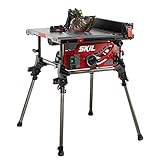
Overview: The SKIL TS6307-00 targets budget-conscious contractors and DIYers prioritizing portability and convenience. This 15-amp jobsite saw features rack and pinion fence rails for accuracy and an integrated folding stand that eliminates separate components. It handles 4x4 materials at 90 degrees and offers 2-47° bevel capacity with positive stops at common angles, making it versatile for framing and finish work on location.
What Makes It Stand Out: Its self-contained design sets it apart—legs fold quickly for transport and storage without tools. The rack and pinion fence system, typically found on premium saws, ensures the fence stays parallel to the blade for consistent cuts. The parallel blade alignment micro-adjustment allows fine-tuning that exceeds expectations for this price class, giving users unexpected precision control.
Value for Money: This represents one of the best values in the jobsite category, undercutting major competitors by $100-200 while delivering professional-grade fence accuracy. For contractors needing a secondary site saw or DIYers with limited space, the price-to-feature ratio is compelling. The integrated stand alone saves $75-150 compared to aftermarket solutions, making it an economical entry into serious portable cutting.
Strengths and Weaknesses: Pros: Highly portable with integrated stand; accurate rack and pinion fence; excellent price point; 4x4 cutting capacity; micro-adjustment capability Cons: Limited rip capacity (likely under 25"); lighter construction reduces stability; basic miter gauge; minimal dust collection; not suitable for fine furniture work
Bottom Line: The SKIL TS6307-00 is ideal for contractors needing a reliable site saw or budget-minded DIYers with limited space. While it won’t replace a cabinet saw for precision work, it delivers unexpected accuracy and convenience at an entry-level price, making it a smart choice for mobile applications.
3. F2 Fusion Tablesaw

Overview: The F2 Fusion Tablesaw targets shop-based woodworkers with its cabinet-mounted design and proprietary dust collection system. Powered by a 1.75HP TEFC motor, this saw emphasizes cleanliness and organization. It ships via freight requiring delivery coordination and includes a 10-inch 60-tooth carbide-tipped blade plus integrated tool storage. The cabinet design provides stability typically found in higher-end hybrids while maintaining a compact footprint.
What Makes It Stand Out: The Fusion dust collection system is engineered for superior extraction compared to standard 4" ports, capturing debris at multiple points. Cabinet mounting eliminates the vibration common in open-stand saws. The integrated storage keeps accessories organized and accessible, reducing workspace clutter. These thoughtful integrations show a design focused on user experience rather than just raw specifications.
Value for Money: Priced in the upper-mid range, the F2 justifies its cost through integration. The included blade and storage solutions add $100+ in value. However, the 1.75HP motor is modest for the price point, limiting thick hardwood capacity. The lesser-known brand may concern buyers compared to established names with proven track records, though the features compete with more expensive options.
Strengths and Weaknesses: Pros: Superior dust collection design; convenient tool storage; cabinet stability; TEFC motor protection; quality included blade; reduced shop noise Cons: Lower horsepower limits heavy-duty work; freight delivery is inconvenient; brand lacks long-term reputation; limited dealer network; rip capacity not specified
Bottom Line: The F2 Fusion suits woodworkers prioritizing dust control and shop organization over raw power. It’s a strong contender for basement or attached garage shops where cleanliness is paramount, but verify local support and compare specs carefully before purchasing.
4. Grizzly Industrial G0899-10" Hybrid Table Saw

Overview: The Grizzly G0899-10" Hybrid Table Saw continues the brand’s tradition of delivering solid woodworking machinery at competitive prices. While specific features are sparsely detailed, Grizzly’s hybrid saws typically combine contractor saw affordability with cabinet saw dust control benefits. The direct-to-consumer model keeps costs down while providing cast iron construction and enclosed cabinet bases suitable for serious hobbyists and small professional shops.
What Makes It Stand Out: Grizzly’s value proposition is undeniable—you’re getting substantial cast iron construction and decent power without the retail markup. The brand has built a loyal following by offering features typically found on more expensive machines. The G0899 likely includes precision-ground cast iron surfaces and a 4" dust port, representing the company’s commitment to professional features at consumer-friendly prices.
Value for Money: Grizzly typically undercuts comparable saws by 20-30% while delivering similar performance. This represents excellent price-to-feature ratio for buyers comfortable with direct purchasing. However, the lack of detailed specifications makes comparison shopping difficult. The warranty and parts support are adequate but require direct factory contact, which may inconvenience some users.
Strengths and Weaknesses: Pros: Typically excellent price-to-feature ratio; solid cast iron construction; effective dust collection; established brand reputation; good online community support Cons: Vague product details create uncertainty; quality control can be inconsistent; basic fence and miter gauge; limited local dealer support; assembly and fine-tuning required
Bottom Line: The G0899 warrants consideration for budget-conscious buyers comfortable with some risk. Research current owner reviews before purchasing, and be prepared for potential adjustments out of the box. It’s a value play that often delivers but verify the return policy and compare to similarly priced alternatives.
5. DEWALT Table Saw 10 Inch with Foldable Rolling Table Saw Stand, 15 Amp, 4800 RPM, 32-1/2-Inch Rip Capacity (DWE7491RS)
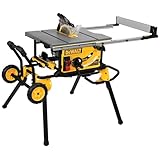
Overview: The DEWALT DWE7491RS represents the pinnacle of portable table saw design, offering unmatched rip capacity and jobsite convenience. This 15-amp saw spins at 4800 RPM and delivers an extraordinary 32-1/2" rip capacity—rivaling many cabinet saws. The included rolling stand combines stability with easy breakdown, while onboard storage keeps the blade guard, fence, riving knife, miter gauge, wrenches, and push stick organized and accessible between jobs.
What Makes It Stand Out: The telescoping rack and pinion fence system adjusts smoothly and maintains perfect parallelism without manual alignment. DEWALT’s patented material support allows safe, narrow rip cuts without additional jigs or helpers. The 32.5" capacity handles full sheet goods, eliminating the need for a panel saw in many situations. The flip-over ripping fence adds versatility for small workpieces.
Value for Money: At the premium end of jobsite saws, the DWE7491RS commands a higher price but delivers professional features that justify the cost. For contractors, the time saved on setup and material handling pays for itself within months. DIYers get near-cabinet capacity with true portability. The durable construction and comprehensive warranty ensure years of reliable service.
Strengths and Weaknesses: Pros: Best-in-class rip capacity; superior fence system; patented material support; convenient onboard storage; robust rolling stand; high RPM for clean cuts Cons: Premium pricing; heavy at 110 pounds; loud operation; dust collection inferior to cabinet saws; plastic height/bevel wheels may wear; not ideal for fine furniture work
Bottom Line: The DEWALT DWE7491RS is the top choice for professionals needing maximum capacity and portability. While overkill for casual users, it’s a reliable workhorse that handles demanding jobsite tasks with precision and efficiency, making it worth every penny for those who earn with their tools.
6. Grizzly Industrial G0771Z - 10" 2 HP 120V Hybrid Table Saw with T-Shaped Fence
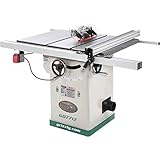
Overview:
The Grizzly G0771Z hybrid table saw targets serious woodworkers ready to graduate from contractor-style tools without upgrading to 240V power. This 10-inch saw combines cabinet-mounted trunnions with a 2 HP, 120V motor, delivering enhanced precision and dust collection for dedicated home shops. Its enclosed base and cast iron table provide the stability and vibration dampening necessary for fine woodworking while maintaining accessibility for standard residential electrical service.
What Makes It Stand Out:
The T-shaped fence system offers repeatability and accuracy that rivals premium cabinet saws, locking firmly without deflection. Cabinet-mounted trunnions enable smoother blade adjustments and maintain alignment far better than traditional contractor saws. The hybrid design captures dust effectively through a fully enclosed base, a critical advantage for indoor workshops. Running on 120V eliminates costly electrical modifications while providing ample power for continuous ripping of hardwoods.
Value for Money:
Positioned in the mid-range market, this saw delivers approximately 80% of cabinet saw performance at roughly half the cost. Comparable alternatives from Jet or Powermatic command 30-40% premiums for similar specifications. For woodworkers outgrowing portable saws, the G0771Z represents a logical upgrade that balances capability, precision, and affordability without requiring industrial power.
Strengths and Weaknesses:
Strengths include robust cast iron construction, powerful 2 HP motor, superior dust collection, and an accurate fence system that holds settings reliably. The cabinet-mounted trunnions ensure long-term alignment stability. Weaknesses include substantial weight (nearly 300 lbs), requiring permanent shop placement and assistance during setup. Initial fence calibration demands patience and precision. The included miter gauge is basic and benefits from immediate replacement for accurate crosscuts.
Bottom Line:
An exceptional value for dedicated hobbyists and prosumer woodworkers seeking cabinet saw precision and dust control on standard household power, making it a smart long-term investment for serious shops.
7. DEWALT 15 Amp 8-1/4 in. Compact Portable Jobsite Table Saw (DWE7485)

Overview:
The DEWALT DWE7485 addresses contractors’ need for extreme portability without sacrificing essential capacity. This 8-1/4-inch jobsite saw features a 15-amp motor and 24.5-inch rip capacity, handling 4x8 sheet goods when paired with external supports. The metal roll cage base withstands harsh transportation and jobsite conditions, while the compact design stores easily in truck beds and tight workspaces, making it ideal for professionals who work across multiple locations.
What Makes It Stand Out:
The rack-and-pinion telescoping fence system delivers accuracy unmatched in the portable saw category, adjusting smoothly and staying parallel to the blade for repetitive cuts. Integrated on-board storage secures the fence, guard, wrenches, and miter gauge, eliminating lost accessories between jobs. The 24.5-inch rip capacity exceeds most compact saws, reducing need for additional tools on typical framing and finish carpentry tasks.
Value for Money:
Competing directly with Bosch and Makita jobsite models, the DEWALT commands a modest premium justified by proven reliability and extensive service network access. For contractors requiring daily transportation and setup, durability translates directly to ROI. Cheaper alternatives may save $100 initially but typically sacrifice fence accuracy and component longevity, costing more in lost productivity over the tool’s lifespan.
Strengths and Weaknesses:
Strengths include exceptional portability (under 50 lbs), accurate fence adjustments, durable metal roll cage, and practical accessory storage. The 15-amp motor handles most jobsite materials efficiently. Weaknesses include the 8-1/4-inch blade, limiting maximum cut depth to 2-9/16 inches—insufficient for cutting 4x4 posts in one pass. The compact table surface necessitates additional infeed/outfeed support for large panels, adding setup time.
Bottom Line:
A top-tier choice for mobile professionals prioritizing portability and reliability, though woodworkers requiring deeper cuts should consider heavier 10-inch alternatives for stationary shop use.
8. MICROJIG GRR-RIPPER GR-100 3D Table Saw Pushblock, Yellow
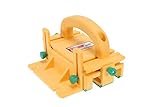
Overview:
The MICROJIG GRR-RIPPER GR-100 redefines table saw safety by maintaining three-directional pressure simultaneously—downward, forward, and lateral—keeping hands safely positioned away from the blade while virtually eliminating kickback. Engineered for versatility, this pushblock system adapts to table saws, router tables, jointers, and band saws, making it an essential safety device for woodworkers handling small or difficult stock where traditional push sticks fail.
What Makes It Stand Out:
The fully adjustable design safely controls workpieces as narrow as 1/4 inch, enabling precision cuts impossible with conventional methods. High-friction Green GRR-RIP material maintains tenacious hold on wood surfaces, even when coated in dust. Unlike simple push sticks, the 3D approach provides complete command over the workpiece throughout the cut, preventing lifting and twisting that cause kickback while protecting fingers from blade contact.
Value for Money:
At approximately $60-70, the GRR-RIPPER costs significantly more than basic push sticks, but this expense is negligible compared to emergency medical costs or permanent disability from table saw injuries. Its multi-machine compatibility multiplies value across an entire shop. For any woodworker prioritizing safety, this represents an indispensable investment that delivers returns with every cut, potentially preventing life-altering accidents.
Strengths and Weaknesses:
Strengths include unparalleled hand protection, precision control of small stock, adaptability across multiple machines, and durable high-friction grip material that dramatically reduces kickback risk. Weaknesses include a notable learning curve for proper setup and technique. Some users find it bulky for quick, simple cuts. The bright yellow plastic shows sawdust marks prominently, and replacement grip pads add ongoing costs. Initial practice is required to develop efficient workflow.
Bottom Line:
An essential safety device that belongs in every woodworker’s arsenal. The price and learning curve are minor compared to the catastrophic injuries it prevents, making it non-negotiable for responsible shop safety.
9. Evolution R10TS 10" Jobsite Table Saw | 15A Powerful Motor | Multi-Material Cutting | 10" TCT Blade | 26” Rip Capacity | 3-3/8” Cut Depth | 0-45º Bevel | Precision Fence | Portable & Heavy-Duty

Overview:
The Evolution R10TS distinguishes itself through genuine multi-material capability, cutting wood, mild steel, and aluminum with a single 10-inch TCT blade. This jobsite saw features a high-torque 15-amp soft-start motor, 26-inch rip capacity, and 3-3/8-inch maximum cut depth—specifications that rival many stationary saws while maintaining portability. Integrated carry handles and steel frame construction enable easy transportation between work sites.
What Makes It Stand Out:
The premium TCT blade eliminates blade changes when transitioning between materials, saving significant time on mixed-material projects. The dual rack-and-pinion fence system provides micro-adjustments and tool-free parallel alignment, ensuring accuracy across diverse applications. Advanced safety features—including an electronic blade brake that stops rotation in seconds—exceed typical jobsite saw standards. An outfeed support bar stabilizes large panels during cutting.
Value for Money:
Priced competitively with premium jobsite saws from DeWalt and Bosch, the multi-material capability adds substantial value for metalworkers, remodelers, and fabricators. Purchasing separate metal-cutting equipment would cost significantly more. While Evolution lacks the established brand recognition of legacy manufacturers, the feature set and included TCT blade justify the investment for users who regularly cut diverse materials.
Strengths and Weaknesses:
Strengths include exceptional versatility, powerful soft-start motor, large rip capacity, comprehensive safety features, and accurate fence system. The blade brake provides peace of mind. Weaknesses include the general-purpose TCT blade, which may not deliver finish-quality cuts in fine hardwoods without switching to a dedicated wood blade. The brand’s shorter market presence means limited long-term durability data. The miter gauge requires upgrade for precision crosscutting tasks.
Bottom Line:
An outstanding choice for contractors and makers working with mixed materials, offering unique capabilities that differentiate it from wood-only jobsite saws and justify its premium price point.
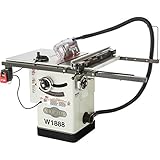
10. Shop Fox W1888 10" Hybrid Table Saw With Riving Knife, White
Overview:
The Shop Fox W1888 hybrid table saw delivers cabinet saw capacity with 2 HP of single-phase power, prewired for 115V but convertible to 230V. Its 40-1/8" x 27" cast iron table and impressive 31-1/2-inch right rip capacity accommodate full sheet goods with minimal additional support. The true riving knife moves with blade height and tilt, providing superior kickback prevention compared to traditional splitters, making it ideal for serious hobbyists and small professional shops.
What Makes It Stand Out:
The extensive 31-1/2-inch rip capacity exceeds most hybrid saws, rivaling cabinet saws costing significantly more. Dual voltage flexibility allows shops to upgrade electrical service without replacing equipment. The massive cast iron table and extension wings provide exceptional stability and vibration dampening. The riving knife system maintains consistent proximity to the blade through all adjustments, a safety feature often omitted in this price class.
Value for Money:
Competing directly with Grizzly’s hybrid lineup, the W1888 typically costs less while delivering comparable specifications and greater rip capacity. For woodworkers needing extensive cutting width without cabinet saw investments, it represents excellent value. Features like dual voltage motor, large table, and riving knife often cost extra on competing models, making this a well-equipped package for its price point.
Strengths and Weaknesses:
Strengths include exceptional rip capacity, powerful dual-voltage motor, stable cast iron table, effective riving knife, and enclosed cabinet base for dust control. The 2 HP motor handles dense hardwoods confidently. Weaknesses include the fence system, which lacks the refined adjustment mechanisms of premium Biesemeyer-style fences. Assembly requires several hours and careful alignment. The included miter gauge is basic and demands immediate replacement for accurate crosscutting.
Bottom Line:
A solid, capable hybrid saw for woodworkers prioritizing rip capacity and power, offering professional features at an accessible price, though discerning users should budget for fence and miter gauge upgrades.
What Exactly Is a Hybrid Table Saw?
The Evolution from Contractor to Cabinet to Hybrid
The hybrid designation represents more than marketing semantics—it marks a fundamental rethinking of table saw architecture. Contractor saws, born from the need for portability, mounted motors externally on the back of the cabinet, creating vibration and alignment challenges. True cabinet saws integrated massive motors inside sealed cabinets, requiring 220V power and permanent shop placement. Hybrid saws cleverly split the difference, typically housing a 1.5 to 2 horsepower motor inside an enclosed cabinet, mimicking cabinet saw stability while often running on standard 110V circuits.
Key Characteristics That Define Hybrid Saws
Look beyond the cabinet enclosure to identify genuine hybrid DNA. These machines feature cabinet-mounted trunnions (the mechanism that supports the arbor assembly), a hallmark of precision typically reserved for cabinet saws. The motor mounts internally, reducing noise and vibration while improving dust collection. Table dimensions usually range from 40 to 52 inches in rip capacity—substantially more than contractor saws but slightly less than industrial cabinet models. Weight typically falls between 250 and 400 pounds, providing mass for stability without requiring a forklift for installation.
Why Hybrid Table Saws Dominate Home Shops
Power and Performance Without the Industrial Footprint
The 1.5 to 2 HP motors in quality hybrid saws deliver surprising cutting authority, typically drawing 13 to 15 amps on 110V circuits. This provides enough torque to resaw 8/4 hardwoods at a reasonable feed rate while maintaining blade speed under load. Unlike contractor saws that bog down when pushed, hybrids maintain consistent RPMs through demanding cuts, reducing burning and tear-out. The enclosed cabinet design captures dust more effectively than open-stand contractor saws, keeping your shop cleaner and your lungs healthier.
The Price-to-Performance Sweet Spot
Hybrid saws typically occupy the $1,000 to $2,500 range—a significant investment, but roughly half the cost of entry-level cabinet saws. This pricing reflects thoughtful engineering compromises: slightly lighter cast iron tables, more compact cabinets, and motors optimized for residential electrical service rather than three-phase industrial power. Yet the core cutting experience—accuracy, power, and repeatability—comes remarkably close to cabinet saw performance for 90% of home shop applications.
Versatility for Diverse Woodworking Projects
From breaking down sheet goods to crafting fine joinery, hybrid saws adapt to varied work. The generous rip capacity handles full plywood sheets with assistance, while the precise fence system enables repeatable cuts for cabinetry components. The robust arbor accepts dado stacks up to 13/16 inch, empowering joinery work without requiring a separate dedicated machine. This versatility makes the hybrid saw the true multi-tool anchor of the modern home shop.
Essential Features That Separate Good from Great
Motor Power and Drive Configuration
Don’t settle for horsepower claims alone. Examine the drive type—belt drive is non-negotiable for hybrids, with poly-V belts offering smoother power transfer than traditional single V-belts. Motors should be totally enclosed fan-cooled (TEFC) for longevity, protecting against dust infiltration. Some premium hybrids offer dual-voltage motors, providing an upgrade path to 220V for increased efficiency and slightly more power. The amperage draw tells the real story: a true 2 HP motor pulls approximately 15 amps at 110V.
Fence Systems: The Heart of Precision
The fence defines your daily experience more than any other component. Look for Biesemeyer-style T-square fences that lock rigidly at the front rail, resisting deflection during cuts. The fence face should be flat within 0.01 inch along its entire length and square to the table within 0.002 inch. Micro-adjustment capabilities and easy removal for dado work indicate thoughtful design. Avoid fences that rely on rear locking mechanisms alone—they inevitably introduce parallelism errors over time.
Table Size and Extension Capabilities
The main cast iron table should measure at least 20 x 27 inches, providing stable support for typical workpieces. Extension wings must be flat and level with the main table—cast iron extensions add mass and stability, while stamped steel saves cost but requires careful shimming. Consider whether the saw accepts aftermarket router table inserts; some hybrids integrate this functionality, saving precious shop space. The front and rear rails should support the full rip capacity without flexing—test this by pressing down on the rail when the fence is locked at maximum extension.
Dust Collection Efficiency
Modern hybrids should feature a 4-inch dust port minimum, positioned to capture debris from both above and below the blade. The internal cabinet design matters tremendously: smooth transitions and minimal internal obstructions prevent chip buildup. Some designs include a sloped cabinet floor directing debris to the port, while others rely on suction alone. The blade guard should integrate a dust port as well, capturing up to 90% of airborne particles at the source during through-cuts.
Safety Features Modern Shops Demand
Riving knives that move with blade height adjustments represent the single most important safety advancement. Unlike old-school splitters, riving knives maintain consistent proximity to the blade, preventing kickback while allowing non-through cuts. The blade guard should attach to the riving knife without tools, encouraging actual use. Paddle-style off switches, preferably with hands-free knee activation, provide emergency stopping power. Some models integrate flesh-sensing technology, though this adds significant cost and complexity.
Decoding Specifications: What the Numbers Actually Mean
Understanding Amperage vs. Horsepower
Manufacturers often advertise “developed horsepower”—a theoretical number measured at peak performance before the motor stalls. Focus instead on running amperage: a 15-amp motor on a 110V circuit delivers approximately 1.8 usable horsepower. This distinction matters because circuit breakers trip on amperage draw, not horsepower claims. If your shop shares a 15-amp circuit with other tools or lighting, you’ll experience nuisance trips with a fully loaded saw. Plan for a dedicated 20-amp circuit to run any hybrid at its potential.
Arbor Size and Blade Compatibility
The standard 5/8-inch arbor accepts the vast majority of 10-inch blades, but check the arbor length. A short arbor limits dado stack width, while an overly long arbor can cause clearance issues with thin throat plates. The arbor should thread in the opposite direction of blade rotation to prevent loosening during use. Quality hybrids feature machined arbors with minimal runout—less than 0.001 inch is the professional standard. Runout beyond 0.003 inch creates vibration and compromises cut quality regardless of blade quality.
Rip Capacity: How Much Is Enough?
A 30-inch rip capacity handles most cabinetry components and furniture parts. However, if you regularly work with full plywood sheets, 36-inch capacity becomes valuable. Beware of saws advertising 52-inch capacity with flimsy extension tables that sag under load. The effective capacity depends on fence rail rigidity and extension wing support. Consider your workflow: breaking down sheets with a track saw before precision cutting on the table saw often makes extreme rip capacity unnecessary while improving accuracy and safety.
Weight and Mobility Considerations
At 300+ pounds, hybrids demand thoughtful placement. Mobile bases become essential in multi-purpose shops, but not all bases are created equal. Look for foot-operated lever systems that lift the saw onto casters without requiring you to bear weight. The base should lower the saw onto solid pads that prevent movement during cuts. Consider ceiling height when adding a mobile base—some systems add 4-6 inches of height, potentially interfering with low garage doors or ductwork.
Build Quality: The Foundation of Precision
Trunnion Design: Cabinet-Mounted vs. Table-Mounted
This single design choice dictates long-term accuracy. Cabinet-mounted trunnions attach to the cabinet itself, allowing the entire blade assembly to tilt while the table remains stationary. This design maintains blade-to-miter-slot alignment through height and tilt adjustments. Table-mounted trunnions, inherited from contractor saw designs, bolt to the table underside, making precise alignment challenging and prone to drift. Identify trunnion type by checking adjustment mechanisms: cabinet-mounted systems adjust from the front and rear of the cabinet, while table-mounted systems adjust from beneath the table.
Table Flatness and Surface Materials
Cast iron tables should be ground flat within 0.005 inch across the surface. High-end hybrids achieve 0.003 inch flatness, matching cabinet saw standards. Check for surface defects by placing a straightedge diagonally across the table in both directions, feeling for rocking or gaps. The surface finish matters: properly ground tables show a consistent pattern, while poorly finished tables may have low spots that affect workpiece support. Rust prevention becomes crucial—machined surfaces should arrive coated with protective grease that removes easily without leaving residue.
Cabinet Construction and Vibration Dampening
Press-formed steel cabinets save cost but ring like a bell when the motor starts. Fully welded steel cabinets or hybrid designs with cast iron components absorb vibration more effectively. Open the cabinet and inspect internal bracing—strategic weld points and reinforcement plates indicate thoughtful engineering. The motor mount should isolate vibration through rubber bushings or isolation mounts. Run the saw without a blade and place your hand on the table; excessive vibration telegraphs through the cast iron and indicates poor motor balance or mounting.
Setup and Calibration: Your First Week
The Critical Importance of Initial Assembly
Resist the urge to make test cuts before complete calibration. The factory assembly process involves shipping adjustments that rarely survive transport intact. Plan a full day for setup, treating it as foundational to years of accurate work. Begin by leveling the cabinet on its mobile base or pads, ensuring all four contact points bear equal weight. This prevents stress on the cast iron table that can affect flatness over time. Torque all bolts to specifications—over-tightening can distort alignment, while under-tightening invites drift.
Aligning the Blade to the Miter Slot
This adjustment forms the cornerstone of accurate crosscuts and rip cuts. Using a dial indicator mounted in the miter slot, measure blade runout at the front and rear of the blade plate. The difference should be less than 0.003 inch, with 0.001 inch representing excellent alignment. Adjust cabinet-mounted trunnions by loosening mounting bolts and tapping the assembly into position. This process requires patience but rewards you with cuts that require minimal sanding and joinery that fits without coercion.
Squaring the Fence for Repeatable Accuracy
Even premium fences require initial squaring. Lock the fence at various positions along the rail, measuring from the front and back of the fence to the miter slot with a precision ruler. The difference should not exceed 0.002 inch. Adjust fence parallelism using the adjustment screws typically located at the fence head. Test by ripping a board, flipping it end-for-end, and ripping the opposite edge—parallel cuts should produce identical width measurements along the entire length.
Dust Collection: From Afterthought to Essential
Port Size and CFM Requirements
A 4-inch port theoretically requires 350-400 CFM for effective chip removal, but real-world performance depends on internal cabinet design. Shop vacuums providing 150-200 CFM can suffice for light work if the cabinet seals well and the port positioning captures debris efficiently. Dedicated dust collectors with 600+ CFM provide superior performance, especially when the blade guard connects to the system. Consider a Y-connector splitting airflow between the cabinet port and blade guard port for comprehensive collection.
Internal Cabinet Design for Airflow
Peer inside the cabinet with a flashlight. Smooth, sloped surfaces direct chips toward the port, while flat bottoms with corners allow material buildup. Some hybrids include internal baffles that create directed airflow patterns, improving collection efficiency. The blade shroud design matters—it should encapsulate the lower blade arc completely, with minimal gaps where chips can escape. Aftermarket blade shrouds can upgrade older hybrid designs, but factory-integrated solutions perform better.
Matching Your Shop’s Dust Collection System
Calculate static pressure losses in your ducting run. A 10-foot flexible hose adds significant resistance compared to smooth rigid pipe. Position the saw within 15 feet of your dust collector, minimizing bends and elevation changes. Install a blast gate at the saw connection to preserve suction at other machines when the saw isn’t in use. For shop vacuum systems, consider a cyclone separator pre-filter to prevent filter clogging from fine dust generated during rip cuts in MDF or particleboard.
Safety Systems: Beyond the Basics
Riving Knife vs. Splitter: The Non-Negotiable Feature
Riving knives rise and fall with blade height, maintaining a fixed distance from the blade—typically within 1/4 inch. This proximity prevents the kerf from closing on the blade, the primary cause of kickback. Splitters remain fixed at one height, creating dangerous gaps when making shallow cuts or using dado blades. The riving knife should remove easily without tools for dado work, but the attachment mechanism must be robust enough to resist forces during kickback events. Inspect the riving knife thickness—it should match standard blade plate thickness (approximately 0.090 inch) to avoid binding in the kerf.
Blade Guards That Woodworkers Actually Use
Traditional blade guards attached to splitters with wing nuts, making removal tedious. Modern riving knife-mounted guards snap on and off in seconds, encouraging use. The best designs feature independent anti-kickback pawls and a splitter plate that rides in the kerf, providing double protection. Dust collection integration adds utility without compromising safety. Evaluate guard visibility—clear polycarbonate tops allow you to see the cut line while protecting fingers. The guard should elevate easily for thicker stock without requiring removal.
Emergency Stops and Paddle Switches
The off switch should be a prominent paddle you can hit with your knee or hip while keeping hands on the workpiece. Paddle switches should latch in the off position, requiring a deliberate pull to restart after power interruption. This prevents unexpected starts when power returns after an outage. Test the switch location—can you reach it without leaning over the blade? Is it protected from accidental bumps that could shut down the saw mid-cut? Some switches include magnetic thermal overload protection, preventing motor damage from sustained overcurrent conditions.
Common Buying Mistakes and How to Avoid Them
Electrical Requirements: 110V vs. 220V Reality Check
Many hybrids advertise dual-voltage capability, but the performance difference matters. On 110V, a 15-amp circuit limits continuous operation before thermal overload trips. Switching to 220V halves the amperage draw, reducing circuit strain and often improving motor longevity. However, the cost of running a 220V line—often $300-500 for electrician service—surprises many buyers. Check your panel capacity before purchase; older homes may lack space for a double-pole breaker. Consider future tool purchases when planning electrical upgrades—a 30-amp 220V subpanel provides room for growth.
The Price Trap: When Budget Becomes Regret
The lowest-priced hybrids often compromise on critical components: table-mounted trunnions, flimsy fences, and underpowered motors. These saws cost less initially but require immediate upgrades—aftermarket fences alone cost $300-400. Mid-range hybrids ($1,500-2,000) typically include cabinet-mounted trunnions and decent fences, providing better long-term value. Factor in accessory costs: a quality dado stack ($150-250), mobile base ($100-200), and upgraded blade ($80-120) quickly add $400-600 to the base price. Budget for these essentials rather than discovering needs after purchase.
Future-Proofing Your Investment
Consider project aspirations beyond current skill level. If you envision building solid wood furniture, prioritize flatness and fence quality. For cabinetry, rip capacity and dust collection matter more. Evaluate accessory availability—will the saw accept aftermarket miter gauges, sleds, and jigs? Check the miter slot dimensions; standard 3/4 x 3/8 inch slots accept the widest range of accessories. Proprietary slot sizes lock you into manufacturer-specific accessories at premium prices. Investigate community support—established brands have active user forums and extensive YouTube tutorials for troubleshooting and upgrades.
Underestimating Mobility Needs
Even in dedicated shop spaces, mobility matters for cleaning, reconfiguring, or servicing the saw. Factory mobile bases often use cheap casters that fail under load. Aftermarket mobile bases with individually adjustable foot pads provide superior stability and easier lifting. Measure doorways and planned travel paths—some hybrids with extension wings exceed 70 inches in width, making navigation through standard 36-inch doors impossible without disassembly. Consider a mobile base with directional locking casters that allow straight-line movement through narrow passages.
Maintenance for Decades of Service
Daily and Weekly Maintenance Routines
After each use, brush debris from the table surface and apply a light coat of rust preventative. Weekly, clean the fence rails with mineral spirits and apply paste wax to reduce friction and prevent corrosion. Check blade guard and riving knife alignment—impacts from kickback can bend these components subtly. Inspect the power cord for damage, especially where it enters the cabinet. A five-minute routine prevents costly repairs and maintains safety.
Belt Tension, Alignment, and Replacement
Belt tension affects power transfer and bearing life. Press the belt at its midpoint—proper tension allows approximately 1/2 inch of deflection. Over-tensioned belts strain motor and arbor bearings, while loose belts slip under load, reducing cutting power. Check belt alignment monthly; misaligned belts create vibration and premature wear. Poly-V belts last longer than standard V-belts but cost more to replace. Keep a spare belt on hand—failure mid-project creates frustrating delays.
Lubrication Schedules and Critical Points
Arbor bearings come pre-greased and sealed, requiring no maintenance. Trunnion adjustment mechanisms and elevation threads need periodic lubrication with dry film lubricant—avoid petroleum greases that attract dust and create abrasive paste. Apply lubricant to the rack-and-pinion elevation system quarterly, working the mechanism through its full range to distribute evenly. Fence cam mechanisms benefit from light machine oil annually. Over-lubrication attracts more dust than it prevents, so apply sparingly.
Bearing Inspection and Replacement
Listen for bearing noise—a high-pitched whine or grinding indicates failure. Remove the belt and spin the arbor by hand; it should turn smoothly without catching or noise. Arbor bearing replacement requires specialized pullers and precise installation—consider professional service unless you’re mechanically experienced. Motor bearings typically last the saw’s lifetime in home shop use but can fail if dust seals degrade. Signs include excessive heat at the motor housing after short run times or visible wobble in the motor shaft.
Essential Accessories and Upgrades
Immediate Impact Accessories
A zero-clearance throat plate should be your first addition—reducing tear-out on the underside of cuts and providing chip-out support for delicate work. Make your own from Baltic birch plywood or purchase aftermarket plates for different blade types. An upgraded blade transforms performance: a 40-tooth combination blade handles 80% of tasks, while a 24-tooth rip blade powers through thick stock and an 80-tooth crosscut blade delivers glass-smooth miters. A quality push stick with a comfortable grip and non-slip surface costs little but provides essential control.
Dado Stack Compatibility Deep Dive
Verify the arbor length accommodates your desired dado width—most hybrids handle up to 13/16 inch stacks. The riving knife must remove completely for dado work; some designs store the knife on-board for quick reinstallation. Check that the dado throat plate sits flush with the table surface—misaligned plates catch workpieces and create dangerous kickback conditions. The motor must have sufficient power to spin dado stacks; underpowered motors stall when cutting wide dadoes in hardwoods, creating burn marks and unsafe conditions.
Aftermarket Fences: Are They Worth It?
Even mid-range hybrids benefit from fence upgrades. Premium aftermarket fences offer micro-adjustment dials for fine-tuning cuts, improved locking mechanisms, and longer rails for extended capacity. Evaluate whether the stock fence meets your accuracy needs before investing—test by making repeated rip cuts and measuring consistency. If variations exceed 0.005 inch over multiple cuts, consider an upgrade. Some aftermarket fences include built-in measuring systems that eliminate reliance on tape measures for repetitive cuts, speeding workflow and improving accuracy.
Outfeed Solutions for Compact Shops
Outfeed support becomes essential when ripping long boards or sheet goods. Folding outfeed tables that attach to the saw rear save space while providing support. For tight shops, consider a roller stand positioned behind the saw—choose stands with height micro-adjustment to match table height precisely within 1/16 inch. Some woodworkers build custom outfeed tables that double as assembly surfaces, maximizing utility in limited space. The outfeed surface should align with the table saw top, not the extension wings, ensuring consistent support across the entire cut.
Shop Layout and Integration
Minimum Space Requirements
Plan for at least 8 feet of clearance in front of the blade and 6 feet behind for handling sheet goods safely. Side clearance of 3 feet on the fence side allows comfortable material handling. Ceiling height matters too—dust collection ducting above the saw requires 7 feet minimum clearance to the top of the cabinet. Account for infeed and outfeed space; even with a modest 30-inch rip capacity, handling 8-foot boards demands 16 feet of total shop length.
Optimizing Workflow Around Your Saw
Position the saw as the central hub of your shop’s workflow, with lumber storage near the infeed side and project assembly area near the outfeed. Keep sharpening and blade storage within arm’s reach of the saw for quick blade changes. Avoid placing the saw where you’ll need to maneuver around vehicles or other large equipment. Consider dust collection pipe routing—straight runs to the collector improve efficiency. If possible, orient the saw so the fence side faces a wall, using the wall for material support during long rips.
Electrical and Lighting Considerations
Install dedicated 20-amp circuits for 110V operation, using 12-gauge wire even if the saw draws less than 15 amps—this reduces voltage drop and improves motor performance. Position outlets to avoid cord strain; the plug should reach comfortably without tension. Lighting requires multiple angles: overhead lighting eliminates shadows on the cut line, while task lighting directed from the front illuminates the blade area without glare. LED strip lights mounted under the extension wings provide excellent workpiece illumination while consuming minimal power.
The Investment Decision: New, Used, or Refurbished
Total Cost of Ownership Analysis
Calculate beyond purchase price: delivery ($100-200), assembly time (8-12 hours for first-timers), electrical upgrades ($300-500), essential accessories ($400-600), and dust collection improvements ($200-400). A $1,500 saw often represents a $2,500 total investment. Divide this by expected lifespan—15-20 years for quality hybrids in home shops—to determine annual cost. This perspective makes mid-range saws more attractive than budget options requiring early replacement.
Evaluating Used Equipment Risks
Used hybrids offer value but hide risks. Inspect the arbor for runout with a dial indicator—repairing worn arbor bearings costs $200-400 professionally. Check table flatness with a straightedge; restoring a warped cast iron table is nearly impossible. Test all adjustments for smooth operation; seized trunnions indicate poor maintenance. Ask about the saw’s history—commercial use dramatically reduces remaining lifespan. Factor in immediate maintenance costs: new belts, blade guard replacement, and bearing inspection. A used saw at 50% of retail price often costs 75% after necessary repairs.
Warranty and Manufacturer Support
Most hybrids carry 2-5 year warranties, but coverage varies. Motors often have separate, longer warranties than the overall machine. Read exclusions carefully—commercial use voids most home-shop warranties. Evaluate parts availability; established brands maintain parts for discontinued models for 10+ years. Customer support responsiveness matters when you need technical guidance during setup. Check online forums for warranty claim experiences—some manufacturers require shipping the entire saw for service, while others send replacement parts for field installation.
First Steps: From Delivery to First Cut
Assembly Best Practices
Recruit a helper for lifting the main cabinet—attempting solo installation risks injury and saw damage. Assemble on a flat, level surface, checking cabinet squareness before attaching extension wings. Leave all bolts finger-tight initially, then torque in stages following a star pattern to prevent stressing cast iron components. Use anti-seize compound on threaded adjustments to prevent galling. Photograph each step during factory hardware removal—reassembly often requires referencing original positions.
Mobile Base and Positioning
Assemble the mobile base before placing the saw cabinet on it—most designs don’t allow base installation after the fact. Position the saw in its final location before loading extension wings and motor, reducing weight during precise placement. Test mobility immediately; a saw that doesn’t move smoothly when empty will only worsen when fully assembled. Lock the base pads and verify stability by pushing firmly on the table corners—any rocking indicates uneven pad adjustment.
Calibration and Test Cuts
Complete all alignments before powering the saw. Start with a simple crosscut on 3/4-inch plywood, checking for squareness with a precision square. Progress to rip cuts, measuring board width at both ends to verify fence parallelism. Test dado cuts with a sacrificial piece, checking bottom flatness and shoulder consistency. Document all settings with photos and notes—this baseline reference speeds future recalibration. Resist the temptation to begin your dream project immediately; invest this calibration time to prevent frustration later.
Building Your First Project
Choose a simple project that exercises fundamental skills: a crosscut sled builds accuracy and safety, while a basic bookshelf tests rip capacity and dado capabilities. These shop projects familiarize you with the saw’s personality—vibration characteristics, noise levels, and adjustment feel—before committing to fine furniture. Keep a log of blade types, feed rates, and results for different species. This data becomes invaluable when troubleshooting issues or planning future projects.
Frequently Asked Questions
What makes a hybrid table saw different from a contractor saw?
Hybrid saws enclose the motor inside a cabinet like cabinet saws, reducing dust and noise while improving stability. They feature cabinet-mounted trunnions for better alignment and typically offer more powerful motors (1.5-2 HP) than contractor saws. The enclosed design also provides superior dust collection and reduces vibration, resulting in cleaner cuts and improved safety.
Can I run a hybrid table saw on a standard household circuit?
Most hybrids operate on 110V and draw 13-15 amps, requiring a dedicated 20-amp circuit for reliable performance. Running on a shared 15-amp circuit with other tools or lights will cause frequent breaker trips. While 110V operation works, upgrading to 220V (if the motor supports it) reduces amperage draw, improves efficiency, and extends motor life.
How important is the fence system compared to other features?
The fence defines your daily experience and cut accuracy more than any other component. A quality fence locks parallel to the blade within thousandths of an inch and remains rigid during cuts. Poor fences drift, flex, and require constant recalibration, negating the precision of even the best-tuned blade. Invest in the best fence your budget allows, as aftermarket upgrades cost nearly as much as upgrading the entire saw later.
What rip capacity do I actually need in a home shop?
For most furniture and cabinetry projects, 30-inch rip capacity suffices. If you regularly process full plywood sheets without a track saw, 36-inch capacity offers convenience. Extreme 52-inch capacity rarely justifies the space requirements for home shops; breaking down sheets with a circular saw or track saw before final cutting is safer and more accurate.
How do I know if a hybrid saw has cabinet-mounted or table-mounted trunnions?
Check the adjustment points: cabinet-mounted trunnions adjust from the front and rear of the cabinet, accessible through panels or openings. Table-mounted trunnions adjust from beneath the table, requiring you to reach under the saw. Cabinet-mounted designs maintain alignment better and are easier to adjust precisely, making them the preferred choice for serious woodworking.
What maintenance is required to keep a hybrid saw accurate?
Daily brushing and rust prevention, weekly fence rail cleaning, monthly belt tension and alignment checks, and quarterly lubrication of elevation and tilt mechanisms. Annual bearing inspection by listening for unusual noise and checking arbor runout prevents catastrophic failures. Proper maintenance takes minutes per session but extends saw life from years to decades.
Are blade guards and riving knives really necessary for experienced woodworkers?
Absolutely. Kickback remains the most common table saw injury, and riving knives prevent it by keeping the kerf open. Modern riving knife-mounted guards add minimal inconvenience while providing essential protection. Even experienced woodworkers experience momentary lapses in attention; safety systems protect you during those critical seconds.
Can I use dado blades with hybrid table saws?
Most hybrids accept dado stacks up to 13/16 inch wide, but verify arbor length and motor power. The riving knife must remove completely for dado work, and you’ll need a separate throat plate. Ensure the motor has sufficient torque—underpowered motors stall during wide dado cuts, creating dangerous situations. Test with narrow dadoes first before attempting full-width cuts in hardwoods.
How much space do I need for a hybrid saw in my garage?
Plan for 8 feet of infeed clearance, 6 feet of outfeed space, and 3 feet on the fence side for material handling. The saw itself occupies roughly 3 x 5 feet of floor space. Total shop space of 12 x 16 feet minimum provides comfortable workflow, though creative layouts can work in smaller areas if you process large material outside the main shop area.
Is buying a used hybrid table saw a good way to save money?
Used hybrids offer value but carry risks. Inspect for arbor runout, table flatness, and smooth operation of all adjustments. Factor in immediate maintenance costs: new belts, bearings, and potentially a blade guard. A used saw at 50% of retail often costs 75% after necessary repairs. For beginners, new saws with warranties provide peace of mind; experienced mechanics can find deals on used equipment requiring minor refurbishment.
See Also
- The 10 Best Cabinet Table Saws Every Wood Shop Needs This Year
- 10 Essential Hybrid Table Saws Every Small Shop Needs in 2026
- The 10 Best Cabinet Table Saws Every Professional Needs This Year
- The 10 Best Compact Table Saws Every Apartment Woodworker Needs This Year
- The 10 Best Mini Table Saws Every DIYer Needs This Year