Table of Contents
There’s a special kind of heartbreak that comes with chip-out. You’ve spent hours carefully laying out a dovetail joint or paring toward a crisp corner, only to watch the wood fibers splinter and tear away at the last moment, leaving behind a ragged, unsightly mess. That pristine edge you envisioned is now a damaged surface that screams “amateur hour.” While many woodworkers resign themselves to this frustrating reality—accepting it as just part of the craft—the truth is that chip-out is almost entirely preventable. The secret isn’t just in your technique; it’s in the geometry of the tool in your hand. Enter the skew chisel: a precision instrument that transforms the way your blade meets the wood, slicing through fibers with a shearing action that leaves glass-smooth surfaces even on the most challenging grain.
But here’s the thing—not all skew chisels are created equal, and simply owning one won’t magically solve your problems. The market is flooded with options that vary wildly in quality, geometry, and suitability for different tasks. Choosing the right skew chisel requires understanding the nuanced relationship between blade angle, steel type, bevel configuration, and your specific woodworking style. This comprehensive guide will arm you with the expert knowledge to select the perfect skew chisel for your needs, master the techniques that guarantee clean corners, and avoid the common pitfalls that cause even experienced craftspeople to stumble.
Top 10 Skew Chisels
Detailed Product Reviews
1. Narex Right & Left 6 mm 1/4" Skew Paring Chisels 811106/811156

Overview: These Czech-made Narex skew paring chisels deliver precision cutting in a compact 6mm package. The matched right and left pair excels at fine detail work, cleaning tight corners, and paring delicate joints where standard chisels cannot reach, making them essential for model makers and fine furniture builders.
What Makes It Stand Out: Fine-grained chrome-manganese steel hardened to Rc 59 provides exceptional edge retention and sharpening response. The 30° skew angle with 25° bevel creates an efficient cutting geometry. Super-hard European Hornbeam handles offer durability and comfortable control during extended handwork sessions without marring.
Value for Money: Positioned in the mid-range price bracket, these Czech-made tools deliver artisanal quality approaching high-end Western brands at a fraction of the cost. For woodworkers seeking professional-grade hand tools for delicate operations, this pair offers substantially better steel and craftsmanship than mass-produced alternatives costing nearly as much.
Strengths and Weaknesses: Pros:
- Premium chrome-manganese steel with excellent temper
- Comfortable Hornbeam handles resist marring
- Precise 30° skew geometry ideal for controlled paring
- Includes both right and left configurations
- Maintains sharp edge through extended use
Cons:
- 6mm width restricts applications to fine detail work only
- Requires careful sharpening technique due to skew angle
- Not suitable for heavy mallet work
- May need initial honing before first use
Bottom Line: An excellent investment for fine detail work, model making, or instrument building. The quality steel and thoughtful design justify the price, though their specialized nature makes them a complement to, rather than replacement for, standard bench chisels.
2. Hurricane Turning Tools, HTT-114, High Speed Steel, 1" Skew Chisel for Woodturning

Overview: The Hurricane HTT-114 skew chisel brings high-speed steel performance to spindle turning at an accessible price point. This 18-inch tool handles coves, fine finishes, edges, and pommels with confidence, making it a versatile workhorse for turners of all skill levels seeking reliable results.
What Makes It Stand Out: Crafted from HSS, this chisel withstands turning’s high temperatures far better than carbon steel. The substantial 1/4" blade thickness reduces vibration, while the 12-inch solid beech handle provides excellent leverage and control. Its versatility across multiple spindle operations eliminates need for several specialized tools.
Value for Money: As an entry-to-mid-level turning tool, Hurricane delivers professional HSS performance at a fraction of premium brand costs. For hobbyist turners building their initial toolkit, this represents exceptional value, though professionals might eventually upgrade for finer edge characteristics and superior steel formulations.
Strengths and Weaknesses: Pros:
- HSS resists heat and maintains edge well
- Thick blade minimizes chatter and vibration
- Comfortable 12-inch beech handle provides control
- Versatile for multiple spindle turning operations
- Affordable entry into quality turning tools
Cons:
- Basic steel formulation compared to premium HSS alloys
- Handle quality is functional but not exceptional
- Requires careful sharpening to maintain geometry
- Spindle-only application limits versatility
- Needs frequent touching up on abrasive woods
Bottom Line: Outstanding choice for beginning and intermediate turners seeking reliable HSS performance without premium pricing. While lacking refinement of expensive brands, its functionality and durability make it a smart purchase for spindle turning enthusiasts.
3. Narex Set of Skew Chisels in Wooden Box 12 mm (0.4725 inch)

Overview: This Narex set presents matched 12mm right and left skew chisels in an attractive wooden box. Sized for substantial detail work, these Czech-made tools excel at dovetail cleanup, shoulder line paring, and decorative cuts where precision angled work is essential for quality results.
What Makes It Stand Out: Traditional Cr-Mn steel heat-treated to 59 HRc delivers optimal edge retention and sharpening ease. Ergonomic hornbeam handles with brass ferrules provide durability and classic aesthetics. The presentation box protects tools and creates an impressive gift option for discerning woodworkers who appreciate fine craftsmanship.
Value for Money: Offering two quality chisels with a presentation box at a modest premium over individual purchases, this set delivers solid value. The versatile 12mm width increases applicability while maintaining Narex’s reputation for affordable European craftsmanship that rivals individual premium chisels costing as much as this complete set.
Strengths and Weaknesses: Pros:
- Matched pair covers all skew cutting situations
- Excellent Cr-Mn steel at optimal 59 HRc hardness
- Attractive wooden presentation box included
- Ergonomic hornbeam handles with brass ferrules
- Versatile 12mm width handles most detail work
Cons:
- Box adds cost some practical users may not value
- Not suitable for heavy chopping or mortising
- Skew angle requires practice to master safely
- Benefits from initial sharpening and flattening
- Limited to hand-powered paring operations
Bottom Line: Exceptional quality and presentation value for woodworkers expanding beyond basic chisel sets. The gift-worthy box and professional-grade tools deliver performance for detailed joinery and decorative work at a reasonable price point.
4. Narex Right & Left 26 mm (1-1/16 Inch) Skew Paring Chisels 81126/811176

Overview: These large-format Narex skew paring chisels handle substantial paring tasks where smaller tools prove inefficient. The 26mm right and left pair excels in timber framing restoration, large-scale joinery, and architectural woodwork requiring angled precision across wide surfaces and substantial material removal.
What Makes It Stand Out: Following Narex’s proven formula, these feature chrome-manganese steel hardened to Rc 59 for excellent edge stability across wide blades. The generous size enables efficient material removal while maintaining skew control benefits. European Hornbeam handles provide necessary heft and durability for demanding large-scale handwork applications.
Value for Money: For woodworkers regularly handling substantial stock, this specialized pair eliminates frustration of modifying standard chisels. The price reflects increased material costs while maintaining Narex’s value reputation. Compared to commissioning custom tools or struggling with inappropriate sizes, this pair offers compelling economics for specific professional applications.
Strengths and Weaknesses: Pros:
- Large 26mm width covers substantial paring tasks efficiently
- Premium chrome-manganese steel construction
- Includes both right and left configurations
- Durable hornbeam handles withstand occasional mallet taps
- Ideal for timber framing and architectural restoration
Cons:
- Specialized tool with limited everyday applications
- Large size makes delicate work challenging
- Significantly more expensive than smaller versions
- Requires dedicated storage space
- Skew technique must be mastered for safe operation
Bottom Line: These serve a valuable niche for woodworkers regularly handling substantial stock in restoration or timber framing. If your work involves large-scale joinery, they’re worthwhile. For general furniture making, the 12mm set offers greater practical versatility and better overall value.
5. Robert Sorby 1 inch Wide Rectangular Standard Skew Dual Bevel Chisel Overall Length 18 1/4 inches 810H-1

Overview: The Robert Sorby 810H-1 embodies British turning tool excellence in a versatile 1-inch rectangular skew chisel. The dual bevel configuration and premium HSS construction serve turners demanding the finest finishes and precise control across spindle work applications from pens to furniture components.
What Makes It Stand Out: Hardened and tempered high-speed steel provides six times the edge life of carbon steel while resisting heat-induced softening during grinding. The rectangular profile offers two distinct bevel angles, effectively providing two tools in one. The 12-inch white ash handle with brass ferrule delivers classic aesthetics and perfect balance.
Value for Money: As a premium tool from woodturning’s most respected brand, Sorby commands a higher price but delivers proportional value. For professional turners or serious hobbyists, the extended edge life and superior steel justify investment over budget HSS alternatives requiring more frequent sharpening and eventual replacement.
Strengths and Weaknesses: Pros:
- Exceptional HSS formulation with superior heat resistance
- Dual bevel design increases versatility significantly
- Six times longer edge retention than carbon steel
- Premium white ash handle with brass ferrule
- Resists “bluing” during heavy grinding operations
Cons:
- Premium pricing may discourage beginners
- Rectangular profile has learning curve versus oval handles
- Requires quality sharpening equipment to maintain properly
- Overkill for occasional turners
- Limited to spindle work applications only
Bottom Line: A professional-grade tool rewarding skilled turners with unparalleled performance and durability. While expensive, the extended edge life and refined geometry make it a wise long-term investment for serious woodturners who value quality and efficiency above initial cost.
6. Robert Sorby Skew Chisel, 3/4" Model B810192, Features Ash Handle and Brass Ferrule

Overview: The Robert Sorby B810192 represents British craftsmanship at its finest, delivering a 3/4-inch skew chisel built for discerning woodturners. Forged from high-speed steel that resists softening from overheating, this tool promises exceptional edge retention—lasting up to six times longer than traditional carbon steel counterparts. The classic ash handle paired with a brass ferrule provides both durability and timeless aesthetics.
What Makes It Stand Out: Robert Sorby’s century-long heritage in tool manufacturing shines through in every detail. The HSS composition specifically addresses the heat-friction challenge inherent in skew chisel work, where improper technique can quickly degrade inferior blades. The ash handle’s grain structure offers superior shock absorption compared to dense tropical hardwoods, reducing hand fatigue during extended spindle turning sessions.
Value for Money: Positioned in the premium tier, this chisel commands a higher price point that reflects its professional-grade materials and craftsmanship. While costing significantly more than entry-level alternatives, the extended edge life and reduced sharpening frequency translate to long-term savings for serious turners who value workshop efficiency.
Strengths and Weaknesses: Strengths include exceptional edge retention, reputable brand backing, ergonomic ash handle, and heat-resistant steel. Weaknesses involve a premium price tag that may deter hobbyists and the potential need for initial honing despite factory sharpening.
Bottom Line: An investment piece for committed woodturners seeking reliability and performance. The Robert Sorby skew chisel justifies its cost through superior materials and proven longevity, making it ideal for those who turn regularly and demand consistent results.
7. Hurricane Turning Tools, HTT-119, High Speed Steel, 1 1/2" Skew Chisel for Woodturning
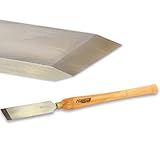
Overview: The Hurricane Turning Tools HTT-119 skew chisel delivers substantial size at an accessible price point, featuring an impressive 1-1/2-inch wide blade crafted from high-speed steel. Measuring 23 inches overall with a substantial 16-inch solid beech handle, this tool prioritizes leverage and stability for spindle turning applications. The generous proportions make it particularly suitable for larger workpieces where mass and control are paramount.
What Makes It Stand Out: The sheer scale of this chisel distinguishes it from competitors—most skews top out at 1-inch width. This extra steel provides enhanced stability when cutting pommels, coves, and planing surfaces on substantial spindles. The extended handle length offers exceptional torque and control, allowing turners to work further from the headstock while maintaining precision.
Value for Money: This tool represents remarkable affordability in the HSS skew chisel category, often retailing for less than half the cost of premium brands. For beginners exploring spindle turning or budget-conscious woodworkers needing a large skew, the value proposition is undeniable. However, the lower price point may reflect in fit-and-finish details rather than functional performance.
Strengths and Weaknesses: Strengths include impressive width for large projects, budget-friendly pricing, HSS durability, and excellent leverage. Weaknesses involve quality control inconsistencies, a handle that some may find excessively long, and the limitation to spindle work only.
Bottom Line: An excellent entry-level option for those needing a large skew chisel without the premium investment. While it lacks the refinement of high-end tools, the Hurricane HTT-119 performs admirably for spindle turning and represents outstanding value for money.
8. Flexcut #2 Palm Skew, High Carbon Steel, Solid Ash Handle, 5/16 Inch (FR308)

Overview: The Flexcut FR308 #2 Palm Skew occupies a distinct category as a carving tool rather than a woodturning chisel, featuring a compact 5/16-inch blade designed for handheld detail work. Crafted from 1095 high-carbon steel and paired with an ergonomic ash handle, this American-made tool arrives razor-sharp and ready for immediate use in relief carving, whittling, and printmaking applications.
What Makes It Stand Out: Flexcut’s signature ergonomic handle design sets this tool apart, fitting naturally in the palm to reduce fatigue during intricate carving sessions. Unlike mass-produced alternatives, the FR308 is precision-machined and hand-sharpened in Pennsylvania, reflecting nearly three decades of specialized tool-making expertise. The high-carbon steel takes an exceptionally keen edge ideal for fine detail work.
Value for Money: Positioned as an affordable specialty tool, the FR308 offers excellent value for woodcarvers seeking quality without premium pricing. While unsuitable for lathe work, its performance in its intended role rivals tools costing significantly more. The included factory edge eliminates initial setup time, representing immediate value.
Strengths and Weaknesses: Strengths include superior ergonomics, exceptional out-of-box sharpness, American manufacturing, and specialized design for carving. Weaknesses involve high-carbon steel’s lower heat resistance compared to HSS, the 5/16-inch size limiting its use to detail work, and complete unsuitability for woodturning applications.
Bottom Line: A specialized tool that excels within its niche. For woodcarvers and whittlers, the Flexcut FR308 is a top-tier choice. However, woodturners should look elsewhere, as this palm tool serves an entirely different purpose despite its “skew” designation.
9. Two Cherries 500-1912 Pair of 12mm Two Cherries Skew Bevel Wood Chisels

Overview: The Two Cherries 500-1912 offers a unique pairing of 12mm skew chisels, delivering German engineering in a dual-tool package. These chisels feature flat hornbeam handles—an exceptionally dense European hardwood prized for its durability and shock resistance. The paired configuration suggests these tools are designed for woodworkers who appreciate having matched tools for complementary cutting tasks or as backup during complex projects.
What Makes It Stand Out: Receiving two identically sized skew chisels is unusual and potentially advantageous, allowing turners to maintain different grinds or bevel angles simultaneously. The hornbeam handles provide a distinctive feel and heft compared to traditional ash or beech, offering superior durability and a polished aesthetic. German manufacturing standards ensure consistent heat treatment and precise geometry.
Value for Money: As a pair, these chisels present solid mid-range value, typically costing less than two individual premium skews while delivering professional-grade performance. The investment makes sense for committed turners who value redundancy and efficiency over single-tool minimalism. However, casual users may find a second identical chisel unnecessary.
Strengths and Weaknesses: Strengths include German manufacturing quality, durable hornbeam handles, paired convenience, and precise 12mm sizing. Weaknesses involve potentially confusing metric-only labeling for imperial users, handles that may feel short compared to dedicated turning tools, and limited versatility from identical sizing.
Bottom Line: A quality investment for serious woodturners who appreciate German craftsmanship and the convenience of paired tools. The Two Cherries set justifies its cost through material quality and manufacturing precision, though the dual-tool concept suits established turners better than beginners.
10. Crown 270AK CRYO Cryogenic 3/4-Inch Skew Chisel

Overview: The Crown 270AK CRYO skew chisel represents advanced metallurgy in woodturning, featuring a 3/4-inch blade subjected to cryogenic treatment for enhanced performance. While detailed specifications are sparse, Crown’s reputation as a British tool manufacturer suggests professional-grade construction. The cryogenic process deep-freezes steel to optimize its crystalline structure, theoretically extending edge life beyond conventional HSS.
What Makes It Stand Out: The cryogenic treatment distinguishes this tool from standard HSS offerings, promising superior wear resistance and edge retention. This specialized process, typically used in industrial cutting applications, indicates Crown’s commitment to pushing tool performance boundaries. The 3/4-inch size remains versatile for both spindle and light bowl work.
Value for Money: As a premium-priced tool, the 270AK CRYO demands justification through measurable performance gains. For high-volume turners or those working abrasive woods, the extended sharpening intervals could offset the initial investment over time. However, hobbyists may not realize sufficient benefit to warrant the price premium over conventional HSS.
Strengths and Weaknesses: Strengths include advanced cryogenic steel treatment, reputable Crown manufacturing, and versatile 3/4-inch sizing. Weaknesses stem from minimal product information, potentially limiting informed purchasing decisions, and a price point that may not deliver proportional benefits for casual users.
Bottom Line: A forward-thinking tool for performance-focused turners intrigued by cryogenic technology. While the benefits are compelling in theory, the Crown 270AK CRYO best suits experienced woodturners who can fully exploit its enhanced edge retention. Beginners should consider standard HSS options first.
Understanding Chip-Out and Why Skew Chisels Are Your Secret Weapon
Chip-out occurs when wood fibers are torn rather than cleanly severed, typically happening at the exit point of a cut where the wood’s natural grain structure offers the least support. Standard bench chisels, with their perpendicular cutting edge, act like a wedge that pushes fibers forward until they reach a breaking point and splinter away. This is especially problematic in brittle woods, figured grain, or when working across the grain where long, unsupported fibers extend beyond your cut line.
Skew chisels fundamentally change this dynamic through their angled cutting geometry. Instead of a direct, confrontational approach, the skew presents a slicing action that severs fibers progressively as it travels. Imagine the difference between pushing a knife straight down through a tomato versus drawing it across with a slight angle—the latter gives you that perfect, clean slice every time. This shearing cut reduces the force required to separate each fiber, minimizing the stress that causes tear-out. The result? Crisp, clean corners and edges that require minimal sanding and maintain the integrity of your workpiece.
The Anatomy of a Skew Chisel: What Makes It Different?
At first glance, a skew chisel might look like a standard chisel that met an unfortunate accident with a grinder. But that distinctive angled edge is pure engineering brilliance. The blade forms a rhomboid shape where the cutting edge sits at anywhere from 20 to 45 degrees relative to the tool’s long axis. This angle is the heart of the tool’s effectiveness, creating a progressive entry point that never attacks the wood all at once.
The bevel itself typically runs along the long side of the blade, though configurations vary. Some models feature a bevel on both sides, while others maintain a flat back like traditional Western chisels. The thickness of the blade tapers toward the edge, but quality skews maintain substantial mass behind the bevel to resist chatter and vibration. The steel extends through the handle as a full tang in premium models, providing the balance and heft necessary for controlled, deliberate cuts.
Blade Angle Geometry: The Science Behind the Cut
The skew angle isn’t arbitrary—it represents a careful balance between cutting efficiency and control. Steeper angles (closer to 45 degrees) provide more aggressive slicing action, making them ideal for softer woods or heavy material removal. Shallower angles (around 20-30 degrees) offer greater precision for delicate work in hardwoods but require more skill to prevent the tool from diving into the workpiece.
The bevel angle itself, measured from the back of the blade to the bevel face, typically ranges from 25 to 30 degrees for most applications. This secondary angle works in concert with the skew angle to create the actual cutting geometry. A lower bevel angle cuts more easily but yields a weaker edge prone to damage. A steeper bevel provides durability at the expense of requiring more force, which can increase chip-out risk in fragile grain.
Handle Design and Ergonomics: Comfort Meets Control
A skew chisel’s handle is more than just a place to grip—it’s a critical component of the control system. The best handles feature a subtle swell in the middle that locks into your palm, preventing the tool from rotating during the slicing motion. Length matters too; longer handles provide more leverage for heavy paring but can feel unwieldy for fine detail work. Most quality skew chisels measure 10 to 12 inches overall, striking a balance that works for both bench and fine joinery tasks.
The wood species used for handles affects both comfort and performance. Dense hardwoods like hornbeam or boxwood resist splitting and transmit vibrations effectively, while softer woods absorb shock but may feel mushy during precise cuts. Modern composite handles offer durability and consistent grain orientation, though traditionalists often prefer the warmth and tactile feedback of a well-crafted wooden handle. The ferrule, typically brass or steel, must be precisely fitted to prevent the handle from splitting under mallet blows.
Types of Skew Chisels: Finding Your Perfect Match
Skew chisels come in several specialized forms, each optimized for particular tasks. Understanding these variations helps you build a collection that covers all your corner-cutting needs without redundancy.
Bench Skew Chisels: The Everyday Workhorse
The most common type, bench skew chisels typically range from 1/2 inch to 1-1/2 inches in width and feature robust construction suitable for both hand pressure and light mallet work. These are your go-to tools for cleaning up tenon shoulders, paring drawer parts, and refining carcase joints. The blade is substantial enough to resist flexing but not so thick that it becomes clumsy for detail work.
Bench skews usually have a double bevel, making them ambidextrous and versatile for various cutting directions. The moderate skew angle (around 30 degrees) provides a sweet spot of performance across different woods and applications. If you’re buying your first skew chisel, a 3/4-inch or 1-inch bench skew offers the most utility for general furniture making.
Dovetail Skew Chisels: Precision for Fine Joints
Dovetail skews are the surgeons of the skew family—narrower, lighter, and optimized for the tight confines of half-blind and through dovetails. Widths typically run from 1/8 inch to 1/2 inch, with the narrowest sizes allowing you to clean the acute corners where tail meets pin. These tools feature a more pronounced skew angle (often 40-45 degrees) that excels at slicing end grain without crushing the delicate fibers at the baseline.
The blades are thinner and more flexible, which might seem counterintuitive but actually helps the tool ride slight irregularities in the joint without levering out material. Handles are shorter and more refined, promoting fingertip control over power. While you can cut dovetails with a standard bench skew, a dedicated dovetail skew in 1/4-inch width will elevate your joint quality dramatically.
Japanese Skew Chisels: The Artisan’s Choice
Japanese skew chisels, or “nomi,” bring a different philosophy to the party. These feature a single bevel on the face side with a hollow-ground back that reduces friction and makes honing faster. The steel is typically harder (RC 63-65) than Western tools, allowing for keener edges that slice with minimal effort. However, this hardness makes them more brittle and unsuitable for mallet work.
The skew angle is often more subtle, relying on the extreme sharpness rather than aggressive geometry to prevent chip-out. Japanese skews excel in softwoods and fine-grained hardwoods where their delicate edges won’t be challenged. They require more frequent honing but reward the patient craftsman with unmatched surface quality. The handle design, featuring a tapered neck and striking hoop, reflects the Japanese preference for hand pressure over mallet blows.
Blade Material Matters: High-Carbon Steel vs. High-Speed Steel
The steel in your skew chisel determines how sharp it can get, how long it stays that way, and how easily you can restore the edge. High-carbon steel (typically O1 or W1 tool steel) remains the gold standard for hand tool purists. It takes a screaming-sharp edge relatively easily, and you can feel the difference as it slices through wood. The downside is edge retention—high-carbon steel dulls faster, especially in abrasive woods or when encountering hidden grit.
High-speed steel (HSS), originally developed for metalworking, brings impressive wear resistance to the woodworking arena. An HSS skew holds its edge two to three times longer than high-carbon steel, making it ideal for production work or woods with high silica content like teak. The trade-off is difficulty in sharpening; HSS requires more time at the grinder and doesn’t achieve the same polished edge that high-carbon can reach. For most hobbyists, the superior sharpness of high-carbon steel outweighs the convenience of HSS’s longevity.
Bevel Configurations: Single vs. Double Bevel Explained
Double-bevel skew chisels feature angled bevels on both long edges of the blade, making them completely ambidextrous and versatile for cuts in either direction. This symmetry is particularly valuable when working around a joint where you need to approach from multiple angles. The downside is that sharpening requires maintaining two bevels, effectively doubling your honing time.
Single-bevel skews, like their Japanese cousins, have one flat back and one beveled edge. This design simplifies sharpening and allows for an extremely flat reference surface that guides the cut. The flat back also excels at trimming shoulders and other situations where you need the tool to register against a surface. However, single-bevel skews are handed—right- or left-skewed—and you’ll need both if you regularly work in both directions. For most woodworkers, starting with a quality double-bevel bench skew provides the most flexibility while you develop your technique.
Width Selection: Choosing the Right Size for Your Project
Skew chisel width directly impacts both efficiency and precision. Wider chisels remove more material per pass but require more force and can be harder to control in tight spots. Narrow chisels offer surgical precision but make broad paring tasks tedious. The key is building a complementary set that covers your typical work.
For furniture making, a three-chisel kit serves most needs: 1/4-inch for fine detail and dovetail work, 3/4-inch for general paring and cleaning joints, and 1-inch for larger surfaces and tenon shoulders. If you specialize in smaller work like boxes or instrument making, add a 1/8-inch skew for the tiniest corners. For timber framing or large-scale joinery, a 1-1/2-inch or even 2-inch skew becomes invaluable for efficient material removal.
Consider the scale of your typical projects when investing. A single 1/2-inch skew chisel handles 80% of most tasks competently, making it the ideal starting point if you’re budget-conscious. As your skills and project complexity grow, add widths that fill gaps in your capabilities rather than buying a complete set immediately.
The Cutting Edge: Preparing Your Skew Chisel for Work
A skew chisel straight from the factory is merely a hint of its potential. The real magic happens when you prepare the cutting edge properly. This process involves three stages: grinding to establish the correct geometry, honing to refine the edge, and polishing to achieve the slicing action that prevents chip-out.
Grinding Techniques for Skew Chisels
Grinding a skew chisel requires a steady hand and understanding of the tool’s three-dimensional geometry. The skew angle must be maintained consistently along the entire edge, which means rotating the tool as you move across the grinding wheel. Start with the heel of the bevel on the wheel, then slowly lift the handle while simultaneously rotating the blade to keep the edge square to the wheel’s rotation.
Use a fine-grit wheel (80-120 grit) and take light passes to avoid overheating the steel. The skew angle is ground into the blade profile, not the bevel itself—remember that the bevel angle is separate from the skew angle. Check your progress frequently with a square to ensure the edge remains straight and the skew angle consistent. Many woodworkers prefer to hollow-grind the bevel, leaving a thin land at the edge that makes subsequent honing faster.
Honing and Polishing for Razor-Sharp Results
Honing a skew chisel demands the same attention to its unique geometry as grinding. Use a honing guide set to your desired bevel angle (25-30 degrees), but recognize that the guide must accommodate the skewed orientation. Freehand honing is possible and ultimately faster, but master it on less expensive chisels first.
Start with a 1000-grit water stone to establish the edge, working the bevel in a figure-eight motion that follows the skew angle. Move to a 4000-grit stone to refine, then an 8000-grit or higher for polishing. The back of the blade requires equal attention—flatten it completely on your coarsest stone, then polish through the grits. A polished back reduces friction and allows the tool to glide effortlessly.
The final test is the “three-finger test.” Gently draw your fingertips across the edge (not along it!). A properly sharpened skew will feel absolutely smooth one way and catch slightly the other. Better yet, test it on end grain—a sharp skew should slice pine end grain cleanly without crushing the fibers.
Mastering the Technique: How to Use Skew Chisels Effectively
Owning a premium skew chisel means nothing without proper technique. The tool’s geometry does half the work, but your hands must do the rest. The fundamental principle is always to slice, never to push straight into the wood.
The Slicing Motion: Your Primary Defense Against Chip-Out
The essence of skew chisel work is the slicing cut, where the tool moves both forward into the wood and sideways along the edge. Imagine cutting a ripe tomato with a kitchen knife—you don’t just press down; you draw the blade across while applying downward pressure. With a skew chisel, this means presenting the tool at a low angle to the work and moving it in a smooth, arcing motion.
For paring end grain, start with the heel of the bevel contacting the wood and the cutting edge slightly elevated. Push forward while simultaneously sliding the tool sideways, letting the skew angle do the work. The cut should begin at one corner and progress across the surface, with each fiber being severed individually rather than the whole mass at once. This technique reduces cutting force by 70% compared to a straight chisel, eliminating the compression that causes fibers to tear loose.
Body Positioning and Tool Control
Your stance anchors the entire operation. Stand with your feet shoulder-width apart, body angled about 45 degrees to the workpiece. This position allows you to generate power from your core while maintaining fine control through your arms and hands. The hand holding the chisel should grip firmly but not white-knuckle tight—think of holding a bird: firm enough it can’t escape, gentle enough you don’t harm it.
Your opposite hand serves as a guide, either registering against the workpiece to control depth or bracing the blade itself. For precision work, place your guiding hand on the blade just behind the cutting edge, using your fingers as a fence that rides along the wood. This technique gives you tactile feedback about the cut’s progress and prevents the tool from diving unexpectedly.
Common Mistakes That Cause Chip-Out (Even With a Skew)
Even the best skew chisel won’t save you from fundamental errors. The most common mistake is using too steep an approach angle. Presenting the tool too vertically transforms the slicing action into a wedging action, defeating the purpose. Keep the handle low, often below the level of the cutting edge, especially when paring horizontally.
Dull edges are chip-out factories. A dull skew requires more force, which compresses wood fibers until they fail catastrophically. If you’re experiencing tear-out, the first diagnostic step is always to re-hone. Another frequent error is stopping mid-cut. The slicing motion must be continuous—hesitation allows the tool to settle into the wood, then restarting causes a catch that tears fibers. Plan your cuts so you can execute them in one smooth motion.
Working against the grain is perhaps the most insidious cause of chip-out. While skew chisels tolerate this better than straight chisels, they still struggle when fibers run directly into the cutting path. Always assess grain direction and orient your cut so the tool slices with the grain’s natural orientation, even if it means approaching from a less convenient angle.
Maintenance and Care: Protecting Your Investment
A quality skew chisel represents a significant investment that can last generations with proper care. After each use, wipe the blade with a clean cloth to remove resin and moisture. A light coat of camellia oil or paste wax prevents rust, especially on high-carbon steel. Store chisels in a rack or roll where edges don’t contact each other—those razor-sharp edges chip easily.
Periodic flattening of the back is essential, as even minimal corrosion creates high spots that affect performance. Every few months, depending on use, refresh the polish on your finest stone. If you notice micro-chipping along the edge, it’s time to return to the grinder and re-establish the geometry. Don’t wait until the tool is truly dull; maintaining a keen edge is easier than restoring a damaged one.
Handle care matters too. Wooden handles benefit from occasional oiling with boiled linseed oil to prevent drying and cracking. Check the ferrule periodically—if it loosens, tap it back into place gently with a small hammer. For tools that see heavy use, consider adding a leather striking cap to protect the handle’s end from mallet damage.
Budget Considerations: Finding Value at Every Price Point
Entry-level skew chisels ($20-40) from reputable manufacturers offer surprisingly good performance for beginners. These tools typically use decent high-carbon steel and adequate heat treatment, though you may need to spend more time on initial sharpening and flattening. The handles are functional if not luxurious, and the overall fit and finish reflect the price point. For a hobbyist working weekend projects, these tools deliver excellent value.
Mid-range options ($60-120) represent the sweet spot for serious amateurs and professionals. You get superior steel (often PM-V11 or similar high-alloy steels), precision grinding, and handles crafted from premium materials. The edges come sharper from the factory and hold their geometry longer. This is where you’ll find the tools that become lifetime companions, offering 90% of the performance of premium chisels at half the price.
Premium skew chisels ($150+) justify their cost through exceptional steel, hand-forged construction, and meticulous quality control. These tools achieve sharper edges, maintain them longer, and offer refined balance that makes extended use less fatiguing. For professionals who use these tools daily, the time saved in sharpening and the superior results easily offset the higher initial cost. For hobbyists, these represent a luxury purchase—wonderful to own but not essential for excellent results.
Frequently Asked Questions
What’s the difference between a left-skew and right-skew chisel, and do I need both?
Left-skew and right-skew chisels are mirror images of each other, designed for cutting in opposite directions. If you primarily work with the tool in one orientation (e.g., always paring from left to right), a single skew matching your preference suffices. However, complex joints often require approaching from both directions, making a matched pair invaluable. Start with one and add its counterpart when you find yourself struggling with awkward cuts.
Can I use a skew chisel for mortise work, or is it only for paring?
Skew chisels excel at paring and light chopping but aren’t ideal for heavy mortising. The angled edge makes it difficult to chop square corners, and the geometry can cause the tool to twist in deep cuts. For mortises, stick with registered or pigsticker mortise chisels, then clean up the walls with a skew chisel afterward for tear-out-free surfaces.
How often should I sharpen my skew chisel during a project?
Sharpen when you notice increased effort or subtle tearing, not when the tool is completely dull. For most woods, a quick touch-up on a fine stone every 30 minutes of active cutting maintains optimal performance. In abrasive woods like oak or woods with interlocked grain, you might need to hone every 15 minutes. The time invested in keeping a keen edge pays dividends in cleaner cuts and less rework.
Is a skew chisel suitable for beginners, or should I master straight chisels first?
While skew chisels have a steeper learning curve, they can actually be more forgiving than straight chisels when used correctly. The slicing action requires less force, reducing the chance of catastrophic slips. However, the tool’s tendency to dive if mishandled means beginners should practice on scrap extensively before tackling fine work. Consider starting with a mid-size bench skew and dedicating time to understanding its geometry before expanding your collection.
What’s the best skew angle for preventing chip-out in highly figured wood?
Figured wood, with its chaotic grain direction, demands the most aggressive slicing action. A skew angle of 40-45 degrees combined with a low cutting angle (handle nearly parallel to the work) gives you the best chance of clean cuts. Some woodworkers even micro-bevel the edge at a slightly steeper angle for added durability when encountering grain reversals. Always take light passes and let the tool’s geometry do the work.
Can I convert a standard bench chisel into a skew chisel by grinding it myself?
Technically yes, but it’s rarely successful. Factory skew chisels are forged with the skew angle integrated into the blade’s structure, ensuring proper mass distribution and balance. Grinding a straight chisel into a skew removes material asymmetrically, potentially weakening the blade and shifting the center of gravity. The resulting tool often feels unbalanced and may chatter. Unless you’re experimenting with an old, expendable chisel, invest in a purpose-made skew.
Why does my skew chisel still cause chip-out even though I’m using proper technique?
The culprit is almost always edge geometry or sharpness. Verify your bevel angle isn’t too steep (causing wedging) and that your edge is truly sharp—a skew should easily shave hair. Also check that you’re not pushing too aggressively; even perfect geometry fails if you overpower the cut. Finally, examine the wood itself. Some species with extreme grain interlock will challenge any tool. In these cases, score the cut line with a knife first to sever surface fibers.
How do I prevent my skew chisel from digging into the workpiece?
Digging occurs when the cutting edge drops below the bevel’s heel, causing the tool to act as a lever. Maintain a low handle angle, especially at the start of a cut, and keep your guiding hand close to the edge to control depth. Some woodworkers find it helpful to slightly round the heel of the bevel, creating a gentle ramp that prevents the tool from catching. Practice on scrap until you develop a feel for the tool’s sweet spot.
Are expensive skew chisels worth the investment for hobbyist woodworkers?
For hobbyists who work primarily on weekends, mid-range chisels offer the best value. Premium tools provide diminishing returns when used infrequently, as their advantages (edge retention, balance) become most apparent during extended use. However, if you find joy in owning and using exceptional tools, a premium skew chisel can be a worthwhile indulgence that inspires you to spend more time in the shop. The key is matching the tool to your actual needs rather than aspirational ones.
Can skew chisels replace my router for cleaning up corners and edges?
In many situations, yes. A sharp skew chisel can produce edges that rival or exceed router quality, especially in situations where grain direction would cause tear-out with a spinning bit. The skew excels at refining machine-cut joints, trimming veneer, and creating crisp details. However, for high-volume material removal or perfectly consistent profiles, power tools maintain their advantage. The skew chisel and router complement each other rather than compete—use the router for heavy lifting and the skew for fine-tuning.
See Also
- Stop Chip-Out with the 10 Best Skew Chisels for Exotic Woods This Year
- Stop Splintering with the 10 Best Skew Chisels This Year
- Stop Tear-Out with the 10 Best Bevel Edge Chisels This Year
- 10 Expert-Recommended Skew Chisels for Cleaning Tight Corners in 2026
- 10 Skew Chisels That Eliminate Chatter in Decorative Cuts This Year