Table of Contents
There’s nothing quite like the frustration of finishing a detailed woodworking project only to discover your corner joints have tiny gaps or rounded edges that catch the light just wrong. That moment when you realize your standard bench chisel—workhorse that it is—simply can’t create the crisp, geometric perfection your design demands. Enter the skew chisel, that deceptively simple blade that separates hobbyist results from furniture-grade craftsmanship. As we approach 2026, the market overflows with options promising laser-precise corners, but understanding what truly makes a skew chisel excel for squaring tasks will save you both money and disappointment.
Master craftsmen know that selecting the right skew chisel isn’t about grabbing the most expensive option or following brand loyalty. It’s about matching specific geometric features, steel characteristics, and ergonomic designs to your particular workflow. Whether you’re cutting perfect half-blind dovetails, cleaning up machine-cut mortises, or creating dead-square shoulders on tenons, the right skew chisel becomes an extension of your hand. Let’s dive deep into the technical and practical considerations that will transform your corner work from “close enough” to “absolutely flawless.”
Top 10 Skew Chisels
Detailed Product Reviews
1. Narex Right & Left 6 mm 1/4" Skew Paring Chisels 811106/811156

Overview: These Czech-made skew paring chisels from Narex represent exceptional European craftsmanship for fine woodworking tasks. The matched pair includes both right and left 6mm (1/4-inch) chisels, specifically designed for precise paring and detail work where a standard chisel won’t suffice. The compact width makes them ideal for cleaning dovetails, trimming tenons, and accessing tight corners.
What Makes It Stand Out: Narex distinguishes itself through meticulous manufacturing and thoughtful material selection. The blades feature fine-grained chrome-manganese steel hardened to Rc 59, offering excellent edge retention while remaining sharpenable. The 30-degree skew angle combined with a 25-degree bevel creates an aggressive yet controllable cutting geometry. The European Hornbeam handles provide superior durability and a comfortable grip, resisting deformation better than beech or maple alternatives.
Value for Money: Positioned in the mid-range price bracket, these chisels deliver professional-grade performance without the premium cost of boutique brands. A comparable pair from high-end manufacturers often costs twice as much, while budget alternatives typically use inferior steel and softer handles. For woodworkers seeking quality without extravagance, this set offers compelling long-term value.
Strengths and Weaknesses: Strengths include exceptional steel quality, ergonomic handle design, precise manufacturing tolerances, and the convenience of a matched pair. The narrow profile excels at detailed work. Weaknesses involve limited versatility due to the 6mm width, potential need for initial sharpening, and unsuitability for heavy mallet work. The skew design also demands practice for proper technique.
Bottom Line: These Narex skew chisels are an excellent investment for serious woodworkers focused on fine detail work. They combine traditional European toolmaking with modern materials, offering performance that exceeds their price point. Highly recommended for those needing precision paring tools.
2. Hurricane Turning Tools, HTT-114, High Speed Steel, 1" Skew Chisel for Woodturning

Overview: The Hurricane HTT-114 is a dedicated woodturning skew chisel engineered for spindle work. Measuring 1-inch wide with an 18-inch overall length, this tool provides the reach and control needed for creating fine details on the lathe. Constructed from high-speed steel, it’s built to withstand the high abrasion and heat generated during turning.
What Makes It Stand Out: This chisel’s primary distinction is its HSS construction at a competitive price point, offering extended edge life compared to carbon steel alternatives. The rectangular profile provides stability against the tool rest, reducing vibration and chatter. Its versatility shines in creating coves, beads, pommels, and delivering glass-smooth finishes without sanding. The solid beech handle offers a traditional feel with adequate durability for turning applications.
Value for Money: As an entry-to-mid-level turning tool, the HTT-114 presents excellent value. HSS turning chisels from premium brands often command 50-100% higher prices. While the beech handle lacks the exotic appeal of rosewood or hornbeam, it functions perfectly well. For turners building their initial toolkit or seeking a backup skew, this represents smart economics.
Strengths and Weaknesses: Strengths include impressive edge retention from HSS, optimal length for lathe work, versatile profile for multiple cuts, and resistance to bluing from overheating. The rectangular cross-section adds control. Weaknesses include the single-chisel format (no left/right pair), beech being less premium than other handle woods, and its specialization exclusively for turning. The tool requires skill development to master skew technique.
Bottom Line: The Hurricane HTT-114 skew chisel is a solid, dependable choice for woodturners seeking HSS performance on a budget. It delivers professional results without professional pricing, making it ideal for hobbyists and intermediate turners ready to upgrade from carbon steel.
3. Narex Set of Skew Chisels in Wooden Box 12 mm (0.4725 inch)

Overview: This Narex skew chisel set elevates the Czech manufacturer’s offerings with a more versatile 12mm width and premium presentation. The matched left and right skew chisels arrive in an attractive wooden box, making them equally suitable for workshop use or gift-giving. They bridge the gap between fine detail tools and general paring chisels.
What Makes It Stand Out: The 12mm width significantly expands capability over narrower skew chisels, handling both detail cleanup and moderate paring tasks efficiently. The traditional Cr-Mn steel, heat-treated to 59 HRc, ensures consistent performance across the Narex line. The ergonomic hornbeam handles with brass ferrules provide durability and classic aesthetics. The included wooden box offers protection and organization rarely found at this price point.
Value for Money: This set represents strong value, typically priced only slightly higher than Narex’s unboxed equivalents. The wooden box adds convenience and protection without substantial cost premium. Compared to purchasing two individual chisels from competitors, the bundled savings become apparent. For woodworkers appreciating both function and form, the presentation enhances perceived value considerably.
Strengths and Weaknesses: Strengths include the versatile 12mm width, matched left/right pair, quality steel and handle materials, attractive storage solution, and brass ferrules for durability. The skew angle suits most woodworking applications. Weaknesses involve the box adding minimal cost, the width potentially being too large for ultra-fine detail work, and the same limitation as other paring chisels—they’re not designed for heavy mallet strikes or chopping.
Bottom Line: The Narex 12mm skew chisel set is an outstanding choice for woodworkers seeking quality, versatility, and presentation. It delivers professional performance in an attractive package at a reasonable price. Highly recommended as a primary skew set for general woodworking.
4. Narex Right & Left 26 mm (1-1/16 Inch) Skew Paring Chisels 81126/811176

Overview: These large-format Narex skew paring chisels provide substantial width for efficient material removal in sizable joinery and trimming tasks. At 26mm (over 1 inch), they represent the upper size range for skew chisels, designed for paring large tenons, wide dovetails, and extensive edge cleanup where narrower tools would prove tedious and time-consuming. They fill a specialized niche in the hand tool arsenal.
What Makes It Stand Out: The exceptional width sets these apart, allowing woodworkers to cover significant surface area with each pass while maintaining the clean slicing action unique to skew chisels. Like other Narex tools, they feature chrome-manganese steel hardened to approximately Rc 59, balancing edge retention and sharpenability. The matched right and left configuration enables working in both directions without compromising grain orientation. European Hornbeam handles likely accompany these larger blades, providing necessary heft and control for stable, two-handed operation.
Value for Money: Large skew chisels are relatively uncommon, often commanding premium prices from specialty makers. Narex delivers these at their characteristic value-oriented pricing, making large-format skews accessible to non-professionals. For woodworkers regularly handling substantial joinery, this pair eliminates the need for multiple passes with narrower chisels, saving time and improving consistency across wide surfaces.
Strengths and Weaknesses: Strengths include the impressive width for efficient paring, quality steel construction, ergonomic handle design, and the matched pair’s versatility. They excel in large-scale detail work and timber framing applications. Weaknesses involve reduced maneuverability in tight spaces, potential overkill for fine furniture makers, and the substantial size requiring more physical effort. The limited product information is also concerning for informed buyers.
Bottom Line: These Narex 26mm skew chisels serve a specific but valuable niche for woodworkers tackling large joinery. They offer the same quality as Narex’s smaller chisels in a more substantial package. Recommended for those needing wide paring capability without boutique pricing.
5. Robert Sorby 1 inch Wide Rectangular Standard Skew Dual Bevel Chisel Overall Length 18 1/4 inches 810H-1

Overview: The Robert Sorby 810H-1 represents the pinnacle of British toolmaking tradition, offering a premium high-speed steel skew chisel for discerning woodturners and woodworkers. The rectangular profile and dual bevel design provide exceptional stability and versatility, while the 1-inch width handles both detail and moderate paring tasks with authority.
What Makes It Stand Out: Robert Sorby’s reputation for excellence is evident in every detail. The hardened and tempered HSS provides six times the edge life of carbon steel while resisting softening from overheating during heavy grinding or extended use. The dual bevel configuration allows multiple cutting approaches, and the rectangular cross-section prevents rolling and ensures consistent tool rest contact. The 12-inch White Ash handle with brass ferrule delivers classic aesthetics and perfect balance.
Value for Money: This chisel commands a premium price, but the HSS construction and legendary brand heritage justify the investment for serious craftspeople. While costing significantly more than Narex or Hurricane equivalents, the extended edge life and superior heat resistance translate to less downtime and more productive work. For professionals and passionate hobbyists, the cost-per-use becomes highly competitive over time.
Strengths and Weaknesses: Strengths include extraordinary edge retention, premium HSS steel, excellent heat resistance, stable rectangular profile, and impeccable craftsmanship. The White Ash handle is both durable and attractive. Weaknesses include the high initial cost, single-chisel format requiring separate left/right purchases, and potential overkill for occasional users. The premium pricing may deter beginners.
Bottom Line: The Robert Sorby 810H-1 is a lifetime tool for serious woodturners and professionals. Its performance and durability justify the premium investment. Highly recommended for those who demand the best and use their tools daily.
6. Robert Sorby Skew Chisel, 3/4" Model B810192, Features Ash Handle and Brass Ferrule

Overview: The Robert Sorby B810192 3/4" Skew Chisel represents British craftsmanship at its finest, designed for discerning woodturners who demand precision and durability. This traditional spindle-turning tool features high-speed steel construction that maintains its edge through extended use, making it ideal for creating fine finishes, beads, and complex details on your workpiece.
What Makes It Stand Out: Robert Sorby’s proprietary HSS formulation resists the softening effect of overheating, preventing that dreaded “blue” discoloration that ruins temper. The manufacturer claims six times longer edge retention compared to carbon steel alternatives. The classic ash handle with brass ferrule provides excellent balance and moisture resistance while delivering that satisfying traditional aesthetic serious turners appreciate.
Value for Money: Positioned in the premium tier, this chisel justifies its higher price point through exceptional longevity. While budget options might need replacement or frequent regrinding, the Sorby’s durable edge reduces downtime and maintenance costs. For professional turners or dedicated hobbyists, the investment pays dividends in consistent performance and reduced frustration.
Strengths and Weaknesses: Strengths include outstanding edge retention, superior steel quality, excellent balance, and classic craftsmanship. The ash handle feels substantial and comfortable during prolonged use. Weaknesses center on the premium price point that may deter beginners, and the 3/4" width might feel limiting for larger spindle work. The learning curve for proper skew technique remains steep regardless of tool quality.
Bottom Line: This is a lifetime tool for serious woodturners. If you’ve mastered basic skew techniques and want a reliable, long-lasting chisel that holds its edge beautifully, the Robert Sorby is worth every penny. Beginners should practice on cheaper alternatives first.
7. Hurricane Turning Tools, HTT-119, High Speed Steel, 1 1/2" Skew Chisel for Woodturning
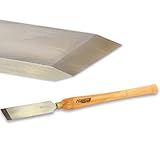
Overview: The Hurricane HTT-119 Skew Chisel offers an accessible entry into high-speed steel turning tools with its generous 1-1/2" width. At 23 inches overall length with a substantial 16" beech handle, this tool provides the reach and leverage needed for confident spindle turning, making it perfect for creating coves, pommels, and fine finishes on larger workpieces.
What Makes It Stand Out: This chisel’s standout feature is its impressive size-to-price ratio. The 1-1/2" width covers more territory than standard 3/4" or 1" skews, while the detailed specifications provide transparency about what you’re buying. The solid beech handle offers decent durability, and the tool’s versatility for various spindle techniques makes it a multi-tasking workhorse for your lathe.
Value for Money: Hurricane delivers exceptional bang for your buck, positioning this HSS chisel at a budget-friendly price point that undercuts premium brands by 50-70%. For turners building their collection or those uncertain about committing to expensive tools, this represents minimal financial risk while still providing high-speed steel benefits over carbon steel alternatives.
Strengths and Weaknesses: Strengths include the attractive price, generous width for efficient material removal, HSS construction, and availability in sets. The long handle provides good control. Weaknesses involve uncertain long-term durability of the brand, potentially less refined finishing compared to premium makers, and the tool’s spindle-only limitation. Some users report the beech handle feels generic rather than ergonomic.
Bottom Line: Perfect for beginners and intermediate turners seeking HSS performance without premium pricing. While it may lack the refinement of legacy brands, the Hurricane HTT-119 delivers solid functionality for spindle work. Consider this your “training wheels” skew before investing in high-end alternatives.
8. Flexcut #2 Palm Skew, High Carbon Steel, Solid Ash Handle, 5/16 Inch (FR308)

Overview: The Flexcut FR308 Palm Skew occupies a different category entirely—a detail carving tool rather than a lathe chisel. This compact 5/16" skew excels at hand-powered woodcarving, whittling, and printmaking tasks where precision and control trump raw material removal. Made in Pennsylvania since 1992, it represents American craftsmanship in the palm tool category.
What Makes It Stand Out: Flexcut’s ergonomic ash handle contours perfectly to your palm, reducing fatigue during intricate carving sessions. The 1095 high-carbon steel arrives razor-sharp and ready for immediate use, eliminating the frustrating initial sharpening ritual. Its compact size excels at accessing tight spaces and creating fine details that larger tools cannot manage, making it ideal for relief carving and decorative work.
Value for Money: Priced in the mid-range for carving tools, the FR308 offers solid value through its user-friendly design and out-of-the-box sharpness. While high-carbon steel requires more frequent honing than HSS, the initial quality and American manufacturing justify the cost. For carvers specifically, this is a specialized tool that earns its keep in detail work.
Strengths and Weaknesses: Strengths include exceptional ergonomics, immediate usability, quality craftsmanship, and the versatile 5/16" size for detail work. The ash handle feels premium. Weaknesses are its limitation to hand carving (not for lathes), smaller scale that won’t suit all projects, and high-carbon steel’s inferior edge retention compared to HSS turning tools. The fixed handle limits customization.
Bottom Line: If you’re a woodcarver seeking a reliable palm skew for detail work, the Flexcut FR308 is an excellent choice. Lathe turners should look elsewhere. This tool shines in its intended niche—precise, comfortable hand carving where traditional mallet-driven chisels prove too cumbersome.
9. Two Cherries 500-1912 Pair of 12mm Two Cherries Skew Bevel Wood Chisels

Overview: The Two Cherries 500-1912 delivers a pair of 12mm skew chisels crafted with German precision. These traditional bench chisels feature flat hornbeam handles and are designed for hand-controlled woodworking tasks rather than lathe turning. The set provides two identical chisels, perfect for keeping different grinds or as a backup when one needs sharpening.
What Makes It Stand Out: German manufacturing pedigree ensures consistent steel quality and heat treatment. The hornbeam handles offer exceptional durability and resistance to marring, while the 12mm (approximately 1/2") width hits a sweet spot for versatile hand work. Receiving two chisels in one package provides immediate backup or allows dedicated setups for different cutting angles and applications.
Value for Money: Getting two German-made chisels at this price point represents solid value, typically costing less per tool than buying individually. While not high-speed steel, the quality carbon steel holds an edge well for hand tools. For woodworkers needing reliable skew chisels for bench work, this pair offers professional quality without premium single-tool pricing.
Strengths and Weaknesses: Strengths include German craftsmanship, durable hornbeam handles, the practical two-chisel value, and quality steel preparation. The 12mm size is versatile for many tasks. Weaknesses involve potential confusion about metric sizing for US buyers, lack of high-speed steel for extended edge life, and unclear marketing regarding lathe versus bench use. The packaging dimensions suggest full-sized tools.
Bottom Line: Excellent for traditional woodworkers needing quality bench chisels for hand-controlled cuts. These are not lathe turning tools. If you value German engineering and want a matched pair for your hand tool collection, this Two Cherries set delivers reliable performance and craftsmanship at a reasonable price point.
10. Crown 270AK CRYO Cryogenic 3/4-Inch Skew Chisel

Overview: The Crown 270AK CRYO Skew Chisel represents advanced metallurgy applied to traditional woodturning, featuring a 3/4" blade subjected to cryogenic treatment for enhanced performance. This British-made tool targets turners seeking the latest in edge retention technology for demanding spindle work, fine finishes, and detailed beading operations.
What Makes It Stand Out: The cryogenic process exposes the steel to extreme cold after heat treatment, refining the molecular structure for improved hardness and wear resistance. While features aren’t explicitly listed, Crown’s CRYO line typically demonstrates measurably longer edge life than conventional HSS. The 3/4" width remains the standard for versatile spindle turning, balancing maneuverability with cutting efficiency.
Value for Money: Priced at a premium over standard HSS chisels, the cryogenic treatment adds cost that only serious turners will justify. For hobbyists who turn occasionally, conventional HSS offers sufficient performance. However, production turners or those working abrasive woods will recoup the investment through reduced sharpening frequency and increased workshop productivity.
Strengths and Weaknesses: Strengths include advanced cryogenic steel treatment, Crown’s reputable craftsmanship, standard 3/4" versatile sizing, and enhanced edge retention for difficult materials. The tool likely features quality handle construction typical of Crown. Weaknesses center on the premium price, lack of detailed product information, and marginal benefits for casual users. Cryogenic advantages diminish with improper sharpening technique.
Bottom Line: Ideal for advanced turners and professionals who prioritize maximum edge life and work with challenging materials. The Crown 270AK CRYO justifies its premium through genuine metallurgical improvements. Casual turners should opt for standard HSS and invest the savings in sharpening equipment. This is a specialist’s tool for demanding applications.
Why Skew Chisels Are Essential for Precision Woodworking
The Anatomy of a Perfect 90-Degree Corner
Creating a true square corner requires three elements working in harmony: a dead-flat reference surface, a cutting edge that meets that surface at exactly 90 degrees, and the ability to approach the workpiece without handle interference. Standard chisels force you to approach corners at awkward angles, often resulting in rounded edges or accidental gouging. The skew chisel’s angled blade design lets you register the flat back firmly against one wall while the beveled edge slices cleanly along the adjacent face.
The physics are elegant—by presenting a shearing cut rather than a direct push, skew chisels reduce tear-out and require less force. This shearing action becomes critical when working across grain in corner cleanup operations. When evaluating tools for 2026, look for blades where the skew angle (typically 20-30 degrees from the centerline) balances accessibility with edge strength. Too steep an angle creates a weak, fragile tip; too shallow and you lose the clearance needed for square corners.
Key Features That Define Premium Skew Chisels
Blade Steel Composition and Hardness
The steel conversation has evolved beyond simple “high-carbon” marketing speak. Modern metallurgy offers distinct advantages for specific applications. For squaring corners, you need steel that holds a razor edge through repeated paring cuts but doesn’t shatter when encountering figured grain. Look for Rockwell hardness ratings between 60-62 HRC for optimal balance—harder edges stay sharp longer but become brittle, while softer steel demands constant touch-ups.
In 2026, powder metallurgy steels are becoming standard in mid-to-high-end tools. These steels feature uniformly distributed carbide particles, creating edges that resist both wear and chipping. The key specification isn’t just the steel type but the heat treatment consistency. A well-tempered simple carbon steel often outperforms a poorly treated exotic alloy. Always inquire about the heat treatment process—multiple tempering cycles indicate a manufacturer serious about performance.
Bevel Angle Geometry for Squaring Tasks
The primary bevel angle dramatically affects corner-cutting performance. For clean, squared corners, a 25-degree primary bevel provides the sweet spot between sharpness and durability. However, the magic happens at the micro-bevel. Adding a 2-degree micro-bevel at 30 degrees creates a robust, polished edge that glides through end grain without crumbling.
Some advanced designs feature a compound bevel—progressively steeper angles near the tip for strength, with a shallower angle along the main edge for slicing efficiency. This hybrid approach excels when you’re both paring and chopping in corner work. When shopping in 2026, examine the bevel transitions under magnification; abrupt angle changes create stress points that lead to premature failure.
Handle Design and Ergonomic Considerations
Your connection to the chisel determines control. For squaring corners, you need handles that allow precise registration and subtle pressure adjustments. Look for handles with a slight swell in the middle—this prevents the tool from twisting in your grip during shearing cuts. The handle’s length should position your hand roughly 6-8 inches from the cutting edge, providing leverage without sacrificing finesse.
2026 designs increasingly feature textured gripping sections or subtle fluting that improves control when hands are sweaty or dusty. Avoid handles with sharp ferrules that dig into your palm during extended use. The tang design matters too—full tangs that extend through the handle provide better feedback than socket designs, letting you feel subtle changes in cutting resistance that indicate grain direction shifts.
Understanding Blade Widths and Applications
Narrow Blades for Tight Spaces
1/4-inch and 3/8-inch skew chisels shine when cleaning up dovetail sockets or accessing tight mortise corners. The narrow profile lets you navigate between closely spaced pins while maintaining full registration against the socket wall. However, narrow blades amplify user error—any twisting motion transfers directly to the cut. For 2026 selections, prioritize narrow chisels with thicker blade stock (at least 3/16 inch) to resist torsional flex.
The trade-off is maneuverability versus stability. Narrow blades require more frequent sharpening but allow surgical precision. When evaluating these tools, check the blade taper. A blade that maintains consistent thickness from tang to tip offers superior rigidity compared to one that thins dramatically near the edge.
Wide Blades for Stability
3/4-inch and 1-inch skew chisels excel at squaring wide tenon shoulders and cleaning up large mortise walls. The broad back provides rock-solid registration, ensuring your corner stays perfectly perpendicular across long cuts. The mass of wider blades also helps power through tough end grain without mallet assistance.
For squared corners, wide blades must have absolutely flat backs—any convexity or concavity telegraphs directly into your workpiece. In 2026, look for wide blades with a slight hollow grind on the back (0.001-0.002 inches), which actually improves registration by creating two stable contact lines rather than a wobbly flat surface. This subtle feature separates premium tools from basic options.
Edge Geometry and Cutting Dynamics
Primary Bevel vs. Secondary Micro-Bevel
The relationship between primary and secondary bevels determines both edge durability and sharpening ease. A single 25-degree bevel sharpens quickly but dulls fast in hard woods. Adding a micro-bevel trades a few extra sharpening minutes for significantly extended edge life. For corner work, the micro-bevel should extend no more than 1/32 inch up from the edge—any larger and you lose the benefits of the shallow primary angle.
Some 2026 innovations include variable micro-bevels that are slightly steeper at the tip (35 degrees) to prevent breakdown during initial corner entry, transitioning to 30 degrees along the main edge. This nuanced geometry requires advanced manufacturing but delivers noticeably cleaner corners in difficult grain.
The Importance of Flat, Polished Backs
A skew chisel’s back isn’t just a reference surface—it’s half the cutting system. For truly squared corners, the back must be flat to within 0.0005 inches along the first inch from the edge. Any deviation creates a rounded corner or forces you to compensate with technique. The polish matters too; a back lapped to 8000 grit or higher reduces friction and prevents the tool from diving into the workpiece.
When evaluating tools, perform the “ruler test”: place a straight edge across the back and hold it to a light source. Any visible gaps indicate high or low spots. In 2026, expect premium tools to arrive with factory-lapped backs that require minimal additional work. Be wary of tools with heavy grinding marks or visible hollows—these demand hours of corrective lapping before they’re corner-ready.
Manufacturing Quality Indicators
Forging vs. Machining Processes
The debate between forged and machined chisels misses the real point: consistency. Modern CNC machining can produce blades with tighter tolerances than hand forging, but forging creates beneficial grain flow in the steel that can improve toughness. The best 2026 skew chisels often combine both—precision-machined backs for flatness with forged tapered sections for strength.
Look for evidence of careful manufacturing: crisp transitions between bevel and flat, symmetrical skew angles on both sides, and cleanly ground edges without burrs. The side bevels (the narrow edges of the blade) should be smoothly ground, not sharp enough to cut your fingers during use. This detail indicates a manufacturer concerned with user experience, not just production speed.
Quality Control Red Flags
Even premium brands occasionally ship subpar tools. Before purchasing, inspect photos or actual tools for warning signs: uneven bevel widths, skew angles that differ from side to side, handles that aren’t perfectly aligned with the blade, or backs with visible grinding chatter marks. In 2026, reputable manufacturers include quality control certificates or batch numbers you can verify online.
The ferrule-to-handle junction reveals much about manufacturing care. There should be no gaps, cracks, or glue squeeze-out. A loose ferrule means the handle will eventually separate, usually at the worst possible moment during a delicate corner cut. Give the ferrule a firm twist—any movement is an immediate disqualification.
Steel Types Demystified
High-Carbon Steel Characteristics
Traditional O1 and W1 high-carbon steels remain popular for good reason: they sharpen easily to a screaming edge and provide excellent feedback during use. For corner work, O1’s fine grain structure allows for exceptionally sharp edges that slice rather than tear. The downside is edge retention—expect to touch up after every few joints in hardwoods like maple or white oak.
When selecting high-carbon steel chisels for 2026, prioritize those with cryogenic treatment. This post-tempering process, where steel is cooled to -300°F, transforms retained austenite to martensite, increasing hardness and wear resistance by 10-15% without sacrificing toughness. It’s a subtle upgrade that pays dividends in edge life.
A2, O1, and PM-V11 Tool Steels
A2 tool steel offers a compelling middle ground—better edge retention than O1 with good toughness. Its larger carbide particles make it slightly harder to sharpen to the ultimate edge, but it holds that edge through dozens of corner cuts. For production woodworkers or those working primarily in abrasive woods like teak, A2 makes practical sense.
PM-V11 represents the current pinnacle for many craftsmen. This powder metallurgy steel combines the easy sharpening of O1 with edge retention exceeding A2. The uniform carbide distribution means the edge degrades gradually rather than chipping catastrophically—a crucial feature when you’re halfway through a perfect corner. The premium is justified if you value time over money, as you’ll spend less time at the sharpening station.
Japanese vs. Western Steel Philosophies
Japanese skew chisels typically use harder steel (63-65 HRC) laminated to softer iron backings. This construction creates an incredibly sharp, long-lasting edge with a backing that absorbs shock and makes sharpening easier—you’re only removing hard steel at the bevel, not the entire blade thickness. The trade-off is brittleness; these chisels demand perfect technique and are unforgiving of twisting or prying.
Western laminated steels are increasingly available in 2026, offering a hybrid approach. They feature hard tool steel edges forge-welded to softer steel bodies, providing some Japanese benefits with more robust construction. For squared corners, these hybrids excel when you need both razor sharpness and the confidence to apply moderate force without fear of snapping the tip.
Handle Materials and Their Impact
Traditional Wood Handles
Ash, hornbeam, and oak remain standard for good reason—they offer excellent shock absorption and a warm, comfortable feel that improves with age. For skew chisels used in corner work, look for handles with straight grain running parallel to the blade. Cross-grain handles can split under mallet blows or when levering out waste.
The finish matters more than the species. Oil finishes provide better grip than glossy lacquers, especially when hands become damp. In 2026, some makers offer wax-impregnated wood handles that repel moisture while maintaining a natural feel. Avoid handles with thick, plastic-feeling finishes—they create a disconnect between you and the cut.
Modern Composite Options
Resin-infused wood and fiberglass-reinforced composites solve the moisture problem while maintaining traditional aesthetics. These materials don’t swell or shrink with humidity changes, ensuring the ferrule stays tight year-round. For skew chisels, look for composites with slightly textured surfaces rather than slick, polished finishes.
Some 2026 innovations include cork-infused polymer handles that provide exceptional grip and vibration damping. While unconventional, these materials can reduce hand fatigue during extended corner-cleaning sessions. The key test: hold the chisel as you would during a delicate paring cut. If you feel any slipping or need to grip excessively tight, the handle material isn’t right for your hands.
Balancing Price and Performance
Entry-Level Considerations
Sub-$50 skew chisels can absolutely produce squared corners, but they demand more user skill and preparation. Expect to spend significant time flattening backs and refining bevels before first use. The steel may not hold an edge as long, but learning to sharpen on inexpensive steel builds valuable skills without the fear of ruining a pricey tool.
When evaluating budget options for 2026, prioritize those with decent steel (even basic high-carbon is fine) and solid handles. You can always upgrade the edge geometry through sharpening, but you can’t fix a poorly tempered blade or a loose handle. Avoid gimmicky features like built-in angle guides or “self-sharpening” claims—these are solutions to problems that don’t exist in quality tools.
Professional-Grade Investments
Premium skew chisels ($100-$200) justify their cost through time savings and consistency. They arrive nearly ready to use, hold edges longer, and provide better feedback during critical cuts. For professionals who cut hundreds of corners monthly, the reduced sharpening time alone pays for the tool.
The real value in 2026’s high-end chisels lies not in exotic materials but in meticulous quality control. Each blade is individually flatness-tested, each handle balanced to the specific blade. Some makers offer regrinding services—send your worn chisel back, and they’ll restore the factory geometry. This long-term relationship approach makes the initial investment more palatable.
Matching Chisels to Your Skill Level
Beginner-Friendly Features
If you’re new to skew chisels, prioritize forgiveness over ultimate performance. Slightly softer steel (58-60 HRC) won’t hold an edge as long but resists chipping when your technique isn’t perfect. A 30-degree bevel angle provides durability while you learn to control the shearing action. Handles should be slightly larger in diameter, giving you a secure grip during the inevitable learning curve.
Look for 2026 models marketed as “student” or “apprentice” grade—these often feature the same quality steel as premium lines but with simpler handles and less hand-finishing. The key is avoiding tools that punish small mistakes with broken edges. As your skill develops, you can progress to harder steels and more acute bevels.
Advanced User Preferences
Experienced craftsmen should seek tools that respond to subtle technique variations. Harder steels (62+ HRC) reward perfect sharpening with edges that glide through figured grain. Narrower handles allow finger placement close to the blade for micro-adjustments during cuts. Some advanced users prefer chisels with minimal handle swell, allowing quick rotational adjustments mid-cut.
For 2026, consider custom or semi-custom options where you can specify blade width, skew angle, and handle dimensions. The ability to match the tool exactly to your hand size and working style eliminates compromises. Advanced users also appreciate chisels with replaceable blades—when the edge becomes too short from repeated sharpenings, simply swap in a new blade while keeping your familiar handle.
Maintenance Requirements for Longevity
Sharpening Systems and Jigs
A skew chisel is only as good as its edge, and maintaining that edge requires appropriate sharpening gear. For squared corners, you need systems that guarantee a flat back and consistent bevel angle. Water stones (1000/4000/8000 grit progression) remain the gold standard, but diamond plates offer convenience and flatness guarantees.
The skew angle complicates freehand sharpening. Consider a honing guide specifically designed for skew blades—some 2026 models feature adjustable skew angles and micro-bevel capabilities. These jigs ensure your expensive steel isn’t wasted by uneven sharpening. For micro-bevels, a simple angle addition to your guide (add 2-5 degrees) creates the secondary bevel quickly without regrinding the entire primary bevel.
Rust Prevention Strategies
Any tool steel will rust if neglected, but skew chisels face unique challenges. The acute angles and tight corners trap moisture, and the frequent hand contact transfers salts and acids that accelerate corrosion. After each use, wipe the blade with a cloth lightly dampened with camellia oil or a modern synthetic protectant.
For 2026 storage, consider VCI (vapor corrosion inhibitor) bags or drawers instead of traditional tool rolls. These materials release protective molecules that coat the steel, preventing rust even in humid shops. If you prefer displaying your chisels, apply a thin coat of paste wax to the blade, buff it thoroughly, and store away from direct sunlight and moisture sources.
Common Selection Mistakes to Avoid
Overlooking Back Flatness
The single biggest error is assuming the back is flat because the manufacturer says so. Always verify back flatness before purchase or immediately after unboxing. A convex back makes true square corners impossible—you’ll constantly fight the tool’s tendency to rock. Some manufacturers intentionally grind backs slightly hollow to reduce lapping time, but excessive hollowing (more than 0.003 inches) creates registration problems.
Test by placing the chisel on a known-flat surface (like a lapped granite plate) and shining a light from behind. Any gaps indicate problems. In 2026, some makers laser-etch flatness certifications on the blade itself—look for these marks as proof of individual inspection.
Misjudging Bevel Angle Needs
Many buyers select bevel angles based on general chisel advice rather than corner-specific requirements. A 20-degree bevel might work beautifully for paring softwood, but it will crumble in the first seconds of squaring a hard maple mortise. Conversely, a 35-degree bevel feels indestructible but requires excessive force, leading to loss of control.
The solution is matching bevel angle to your primary wood species and technique. For hardwoods, start at 25 degrees and add a 30-degree micro-bevel. For softwoods, 20 degrees with a 25-degree micro-bevel provides cleaner cuts. Some 2026 chisels feature user-adjustable bevel angles through removable secondary bevels—a clever feature for those who work across multiple wood types.
Hands-On Evaluation Techniques
The Paper Test and Visual Inspection
Before committing to a skew chisel, perform simple tests. The paper test reveals edge sharpness and consistency: a properly sharpened skew should slice newsprint with zero tearing, maintaining this performance across the entire edge. For squared corners, pay special attention to the tip—it should cut paper cleanly, not push it away.
Visually inspect the edge under 10x magnification. You should see a continuous, polished surface with no visible chips, rolls, or grinder marks. The skew angle should be perfectly symmetrical on both sides. In 2026, use your smartphone’s macro mode if you don’t have a loupe—modern phone cameras capture remarkable detail.
Test Cuts and Feel Assessment
If possible, make test cuts in a wood species similar to your typical projects. The chisel should enter the wood smoothly, with consistent resistance. When paring a corner, you should feel the back register solidly against the wood while the bevel guides the cut. Any catching, diving, or wandering indicates geometry problems.
Pay attention to vibration and sound. A well-made skew chisel produces a smooth, quiet cut. Chatter or ringing suggests poor steel tempering or blade harmonics issues. For 2026 purchases, some high-end retailers offer test stations with sample wood—take advantage of these to evaluate tools in real conditions rather than relying on specifications alone.
2026 Trends in Skew Chisel Design
Smart Manufacturing Advances
The woodworking tool industry is embracing Industry 4.0 principles. Expect 2026 skew chisels to feature laser-measured flatness specs, AI-optimized bevel grinding, and batch-level quality tracking via QR codes. Some manufacturers now use robotic honing systems that replicate master sharpener techniques, ensuring each blade meets exacting standards.
These advances don’t necessarily mean better tools, but they do mean more consistent tools. A chisel with a blockchain-verified manufacturing record might sound gimmicky, but it guarantees you’re getting exactly what was specified, not a Friday afternoon production run. Look for these digital provenance features when investing in premium tools.
Sustainable Material Innovations
Environmental concerns are reshaping handle materials. Bio-based composites derived from flax fibers and soy resins now match traditional wood’s performance while reducing environmental impact. For steel, some makers are experimenting with recycled tool steel that maintains quality through careful sorting and remelting processes.
These sustainable options often cost slightly more but appeal to environmentally conscious craftsmen. More importantly, they perform identically to traditional materials, proving that ecological responsibility doesn’t require performance compromises. In 2026, expect these options to become mainstream rather than niche.
Frequently Asked Questions
What’s the ideal skew angle for squaring corners?
For most applications, a 25-degree skew angle provides optimal clearance and edge strength. However, if you primarily work in tight spaces or cut extremely hard woods, a 20-degree angle improves access while a 30-degree angle adds durability. The sweet spot remains 25 degrees for general-purpose corner work.
Can I use a skew chisel for tasks other than squaring corners?
Absolutely. Skew chisels excel at paring end grain, creating V-grooves, and cleaning up curved edges. Their shearing action makes them versatile for any task requiring a slicing cut. Many craftsmen use their skew chisels as go-to tools for general paring work, not just corners.
How do I know if a chisel’s back is truly flat?
Use a precision straight edge and feeler gauges. Place the straight edge across the back and try to slide feeler gauges underneath. The first inch from the cutting edge should accept no feeler gauge thicker than 0.0005 inches. Alternatively, mark the back with a permanent marker and lap it on fine abrasive; any remaining ink after a few strokes indicates high spots.
Is it worth buying a set of skew chisels or individual sizes?
Start with a single 1/2-inch skew chisel, which handles most corner tasks. Once you master it, add a 1/4-inch for tight dovetails and a 3/4-inch for large tenons. Buying individually lets you invest in quality for each size rather than settling for mediocre tools in a set. Most craftsmen find three sizes cover 95% of their needs.
How often should I sharpen when squaring corners?
In hardwoods, expect to touch up the micro-bevel after every 5-10 corners. In softwoods, you might get 15-20 corners before needing attention. The key is learning to recognize when the edge stops cutting cleanly rather than following a strict schedule. If you feel increased resistance or see any tear-out, it’s time to hone.
What’s the difference between a left-hand and right-hand skew chisel?
The designation refers to which direction the skew angles. Right-hand skews cut best when moving from right to left; left-hand skews excel left to right. For squared corners, you ideally need both to work efficiently in both directions without contorting your body. Start with the orientation matching your dominant hand, then add the opposite as budget allows.
Can I convert a standard chisel into a skew chisel?
While possible, it’s not recommended. Grinding a skew angle into a standard chisel removes significant material, potentially overheating the steel and ruining its temper. Additionally, the blade geometry won’t be optimized for the skew angle, and you’ll lose the balanced feel of a purpose-built tool. The time and risk outweigh the cost savings.
Why do some skew chisels have a slight hollow grind on the back?
A controlled hollow grind (0.001-0.002 inches deep) creates two contact lines near the edges, improving stability during paring cuts. It also reduces the surface area you need to lap when sharpening. However, excessive hollowing weakens the blade and makes true square corners impossible. Quality hollow grinding is a feature; accidental hollow grinding from poor manufacturing is a defect.
What’s the best way to store skew chisels?
Store them individually in a rack that supports the blade, not just hanging by the handle. Edge contact with other tools causes microscopic damage that ruins corner precision. Use blade guards or store in divided drawers. For 2026, consider VCI storage bags for long-term protection, especially in humid climates.
Are expensive skew chisels really worth the investment for hobbyists?
If you build fewer than ten projects annually, a quality mid-range chisel ($50-75) serves you better than a premium option. The key is learning proper sharpening and technique. An expensive chisel won’t compensate for poor skills, but a decent chisel properly maintained will deliver professional results. Invest in sharpening equipment first, then upgrade chisels as your skills justify the expense.
See Also
- 10 Best Mortise Chisels for Clean Square Holes This Year
- How to Choose 10 Depth Gauges for Perfect Mortise Fit in 2026
- The 10 Most Accurate Digital Angle Gauges for Table-Saw Blades in 2026
- 10 Most Accurate Marking Wheels for Gauge Consistency in 2026
- 10 Most Accurate Speed Squares for Stair Layout Reviews in 2026